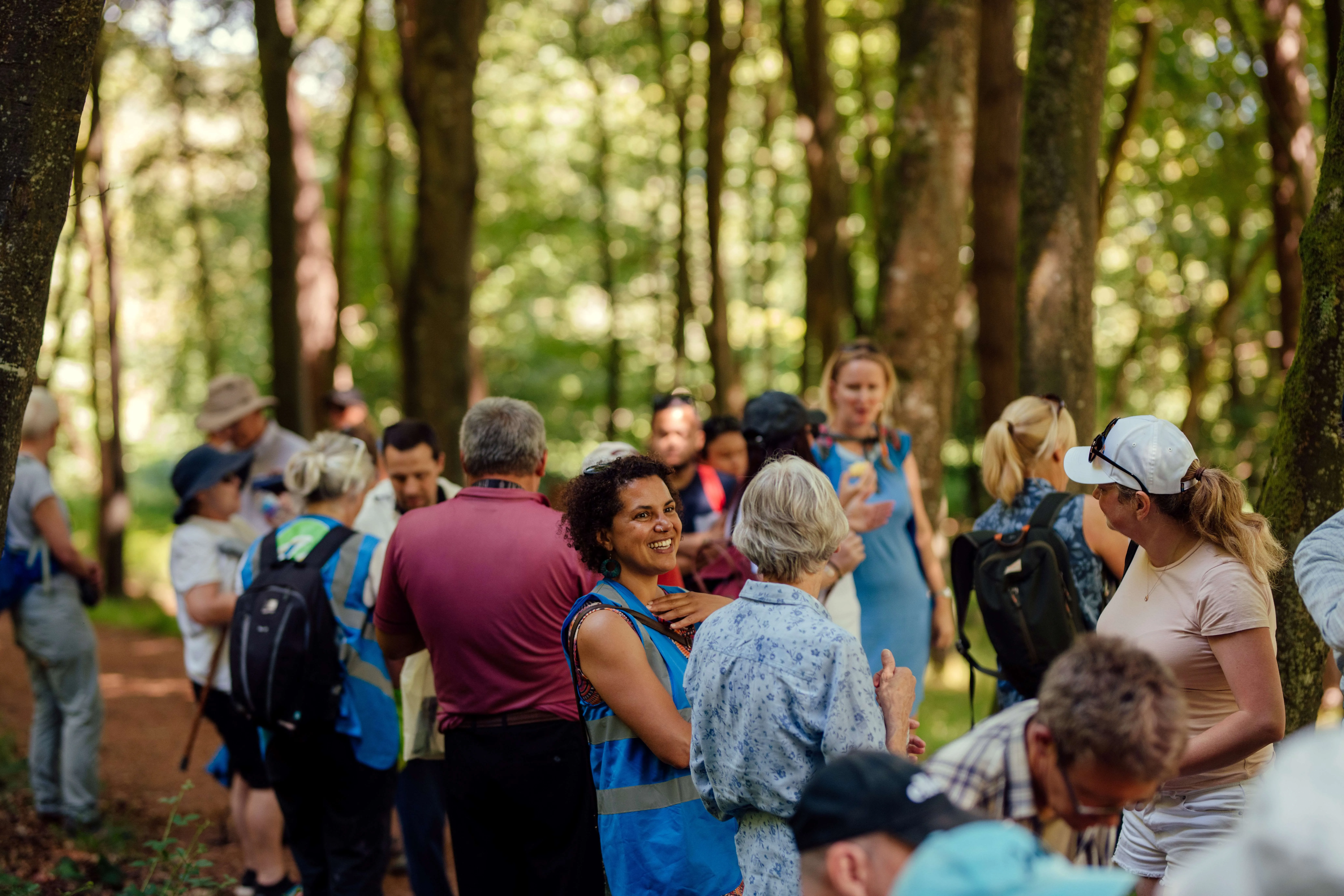
What happens when you give passionate local teams the freedom to test a small idea - one rooted in place, community and nature - and simply see what’s possible?
That’s the question behind the National Trails UK Test and Trial Fund: a programme created to spark innovation along England’s National Trails and support projects that can make a real difference for landscapes, wildlife and the people who care about them.
In the most recent blog in this series, we shared five brilliant examples of how modest funding can unlock outsized impact. Today, we’re back with four more projects each one shaped by local need, creative partnerships and a shared belief that protecting these special places starts with trying new approaches on the ground.
If you missed the earlier blogs in this series, you can read our introduction to the fund and the first five project stories on the National Trails UK website.
Blue Bells, Big Skies

Blue Bells, Big Skies is all about helping people and wildlife thrive side by side on the North Downs Way National Trail where it passes the Blue Bell Hill Nature reserve. Just outside busy Maidstone, in the Kent Downs National Landscape, this hilltop spot is packed with wildflowers and boasts rare chalk grassland – a habitat so special it’s recognised internationally. Add in sweeping views across the Medway Valley and the Weald and you’ve got a place that feels a world away. Best of all, it’s easily accessed from the nearby carpark; or you can even stay in the car with your cuppa to enjoy the view!
With support from the Test and Trial Fund, Kent Wildlife Trust teamed up with the North Downs Way National Trail to make this special place even better for people and for wildlife.

Volunteers rolled up their sleeves and got stuck in alongside a local contractor. They installed two kissing gates (easy for people, not so easy for quad bikes!), added benches with simple info boards and cleared scrub along 300 metres of the trail.
The result? Big skies, better views and more breathing space for wildlife like adders and the brilliant blue Adonis blue and vulnerable brown hairstreak butterflies..
Alison Ruyter, Area Manager for Kent Wildlife Trust says:
‘So many people come to spend time on this special site, it's lovely to work with like minded partners who want to help people get the best out of their time outdoors and improve wildlife. Over the years, the site has already welcomed back silver spotted skipper and Adonis blue butterflies. Brown hairstreak could be the next step in rebuilding nature here. Maybe they will even use the North Downs Way National Trail route to spread further afield?’
Keep an eye out: Blue Bells, Big Skies will soon appear in the next ‘Paths to Nature Recovery’ film series.
A moment in the meadow – connecting National Trail users with nature

How can a walk along a National Trail become something more? A chance to slow down, breathe and really notice the world around you? That’s what Redcar and Cleveland Borough Council is exploring through ‘A Moment in the Meadow’, based in Saltburn along the Cleveland Way National Trail.

The project shines a light on the wildflower meadows that meet the trail – colourful, buzzing spaces that are just as important for bees and butterflies, as they are uplifting for people. From installing pollinator-friendly benches to delivering hands-on activities like carving art from fallen trees, it’s all designed to help everyone – walkers, local schools and community groups - discover the meadow’s hidden treasures.
By inviting people to pause and take a moment, the project helps boost wellbeing, building understanding of local wildlife and inspire more people to care for these special green spaces.
And it doesn’t stop there. A Moment in the Meadow social media campaign is spreading the word even further, celebrating the species that make these meadows so special. Take a look here: www.Facebook.com/CountrysideTeamRCBC
Naomi Green, Countryside Manager for Redcar and Cleveland Borough Council, said:
“Wildflower meadows along the Cleveland Way are vibrant spaces for both wildlife and people. Through ‘A Moment in the Meadow’ we’re encouraging walkers to pause, take in these colourful landscapes and feel more connected to nature. We hope it not only inspires people to care for these special habitats, but also encourages more people to get out and experience our National Trail”.
Celebrating Thanet's coastal chalk grassland

What if one of the UK’s rarest habitats was right on your doorstep and you didn’t even realise it? That’s the idea driving this project, which is celebrating 15 miles of precious chalk grassland along the King Charles III England Coast Path National Trail, and opening more eyes to the wildlife that thrives here.
Thanet’s chalk grassland is extraordinary. It’s home to 22 of the UK’s 24 bumblebee species, including five that are nationally rare, alongside ground-nesting birds and delicate wild orchids. Yet much of this wildlife survives in small, scattered pockets. Helping people understand how special and vulnerable these places are, is key to keeping them thriving.
Building on years of local conservation work by community groups and local and national charities, this project deepens that connection, encouraging residents and coast path users to feel proud of the wildlife on their doorstep and empowered to protect it. It’s rooted in a simple truth: time spent in nature is good for us. Strengthening that bond between people and place supports both conservation and wellbeing.
Working with partners, including the Bumblebee Conservation Trust, the team has created beautiful signs that highlight pollinator corridors and rich grassland habitat right next to Broadstairs, Margate, and Ramsgate. They make it easy to follow flower rich routes along the coast, whether you’re heading out for a gentle wander, a bike ride or joining a guided walk..
Four new interpretation boards, wooden wayfinding signs and reusable wildlife ID guides now help residents and visitors spot rare species and see the coast through fresh eyes, turning an everyday walk along the coast, into a chance to notice, connect and care.
Phoebe Cullingworth, Biodiversity and Tree Coordinator, Thanet District Council
"You don't have to travel far to connect with nature, even in our urban environment. Thanet's coastal chalk grassland is home to some of the UK's rarest wildlife, and local community groups have been its quiet guardians for years. This project is about making that connection visible: between people and place, between everyday walks and extraordinary natural habitat."
Restoring reedbeds and connecting users with the sounds of nature along our dynamic Yorkshire coastline

How do you restore a small but vital piece of coastline for the birds that depend on it, while helping people feel more connected to the nature around them? That’s the idea behind Yorkshire Wildlife Trust’s project at Flamborough Cliffs nature reserve, one of 115 nature reserves cared for by the Trust and where people can watch wildlife in Yorkshire. Here’ they’re bringing a much loved reedbed back to life, creating a healthier home for wildlife along the Yorkshire coast.
Over time the reedbed had begun to close in. Reeds and scrub were spreading. Open water was disappearing and without action this important wetland could have been lost. Reedbeds provide food, nesting sites and shelter for many species, including migratory birds that rely on them as resting points during their long journeys. Careful restoration work is now reversing that decline. Scrub is being removed and the wetland is being reshaped to bring back areas of open water, helping the reedbed hold more water for longer. These improvements will strengthen the site for the future, ensuring it continues to support both resident and visiting species.
Alongside the habitat work, new interpretation will help visitors understand what’ happening on the ground and why it matters. Information boards will explain the restoration process and highlight the wildlife that depends on the reedbed, with a QR code linking to a soundscape so people can listen to the birds and learn to recognise their calls.
Jon Traill, Yorkshire Wildlife Trust Living Landscape Manager
‘Flamborough is visited by thousands of visitors who enjoy walking the cliff paths through the Yorkshire Wildlife Trust reserve, marvelling at the amazing seabird spectacle. But it’s not just the puffins and nesting seabirds that our nature reserve protects. The grasslands and scrub on the cliff tops are homes for butterflies, bees and farmland birds too.
The restored reedbed adds an extra special area of freshwater which is rare habitat on the coast creating a link between the land and the sea. It will provide a resting, feeding and breeding area for birds and amphibians and a place for our visitors to enjoy, on their walks around the cliffs.’
With support from the Test and Trial Fund, this small but important reedbed is being secured for the future. With few habitats like this along the coast, the project will make a real different for migratory birds. It will also strengthen partnerships between Yorkshire Wildlife Trust, National Trail volunteers and the wider community. Together it’s helping more people connect with the sights and sounds of nature along this dynamic stretch of coastline.
What now?
Together, these projects show how small, place-based ideas can unlock meaningful change - for nature, for communities, and for the future of our National Trails.
They also highlight something important for funders, policy makers and protected landscape leaders: modest, targeted investment can generate powerful learning, fresh partnerships, and approaches that could be scaled far beyond a single trail.
This blog completes our showcase of the Test and Trial Fund projects. But the story doesn’t end here.
In the final instalment of this series, we’ll revisit all ten initiatives to explore the impact they’ve had, what they’ve taught us, and what they could mean for the future of innovation in our most cherished landscapes.
Watch this space.
Main image (c) Ross Harrison
More posts
.jpg)
NTUK Summit 2026 - Innovation on the National Trails
_Abbie%20Merritt_lpr.jpg)
NTUK Procurement - Paths to Inclusion Evaluation Consultant
The people behind the path: How volunteers keep the Cotswold Way National Trail thriving
Signup to our newsletter