At National Trails UK, we believe our trails should be welcoming, inclusive spaces where everyone can experience the benefits of the outdoors.
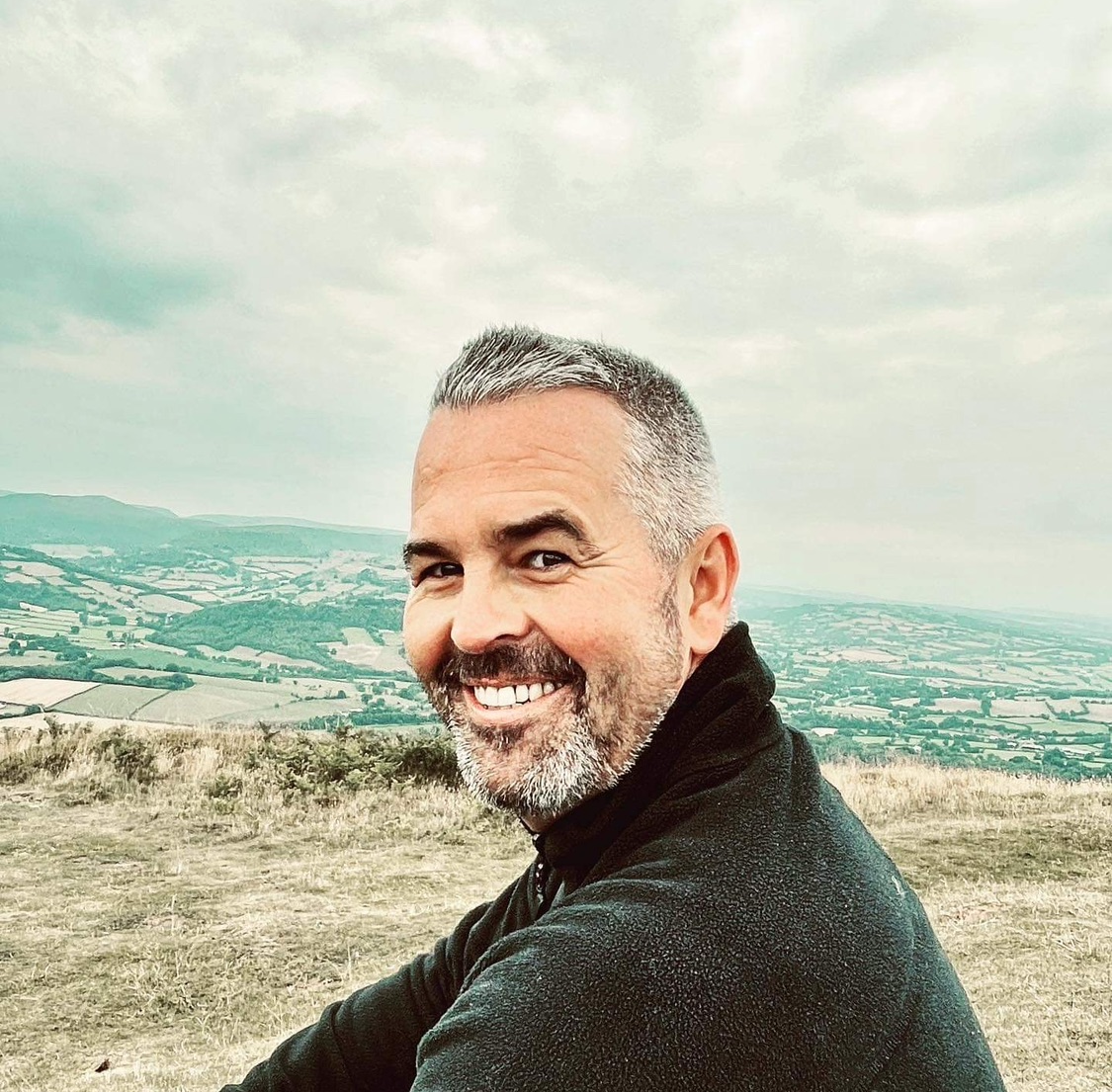
In this guest blog, Gareth Davies, who lost his sight in 2014 and now leads RNIB Cymru's See Cymru Differently initiative, shares how Wales’ National Trails supported his journey through sight loss. Drawing on both lived experience and over two decades working in disability and social justice, Gareth reflects on the power of landscapes to rebuild identity, and his mission to make them accessible to all.
Finding a way back: Rebuilding through the outdoors
Just over ten years ago, I lost my eyesight and was registered blind. My world changed overnight, and with it came grief, confusion, and a long, painful process of trying to understand who I was now. Beyond losing my sight, it was a dismantling of my identity, of a life I once knew, and the slow rebuilding of something new.
For me, that rebuilding happened outdoors.
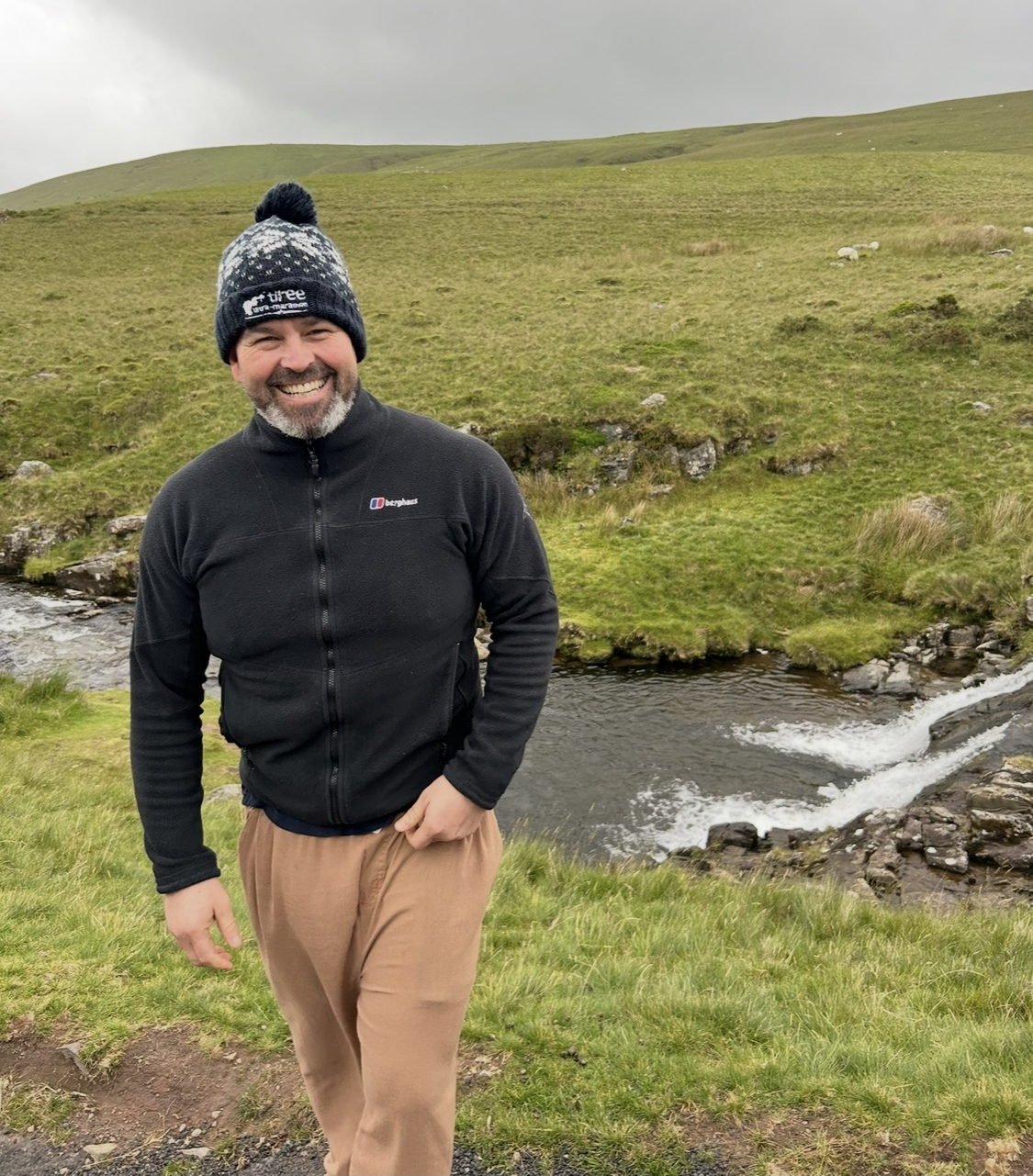
The landscapes of Wales – the hills, the mountains, the woods, the coastline, and the three National Trails – the Pembrokeshire Coast Path, Offa’s Dyke and Glyndŵr’s Way – became the places where I could breathe again. They gave me space to process my new world as a blind person. They helped me reconnect with myself, with my identity, and with something far older and deeper: the land itself.
The role of National Trails in recovery and confidence
In those early months, my friends refused to let sight loss define me.
My best friend from school, serving in the military, signed us up for the Blind Veterans 100km, 24-hour challenge along the South Downs Way National Trail. He guided me through the night across the South Downs, step by step, hour after hour. I couldn’t see a thing in the darkness, just the reflection of a high-vis strip on his rucksack from my headtorch, but he never treated me as fragile. He treated me as me.
.PNG)
Soon after, a group of friends took me hiking in Eryri, guiding me up Yr Wyddfa in the snow and also to Pen-y-Fan in Bannau Brycheiniog. Again, they didn’t wrap me in cotton wool or tiptoe around my blindness: they simply showed me that the mountains were still mine if I wanted them.
Another friend took me running along the Pembrokeshire Coast Path National Trail, letting me feel the wind coming over the cliffs, the spray from the waves crashing over the rocks, and the powerful sound of the sea. Those runs reminded me that adventure was still possible. That my body still worked. That I could still move with purpose.
These moments rebuilt my confidence. They gave me the space to process my new reality through connection to the landscapes and coastline via our National Trails.
Hiraeth, identity and the power of place
In Wales, we have a word: hiraeth. It has no direct English translation, but it describes a deep longing for a home, a memory, a nostalgic way of being that feels just out of reach.
Sight loss carries its own kind of hiraeth. I longed for the ease of vision, for the life I once had. But I also found hiraeth in the landscapes themselves:
- In the sound of waves near St Davids along the Pembrokeshire Coast Path
- In the crunch of snow under my boots in Eryri
- In the wind threading through the valleys of Offa’s Dyke National Trail
- In the hills and woods above Abergavenny
And in those moments, I felt something else too: yma o hyd - we’re still here.
Despite everything, I was still here. Still part of this land. Still connected to something bigger than me. Still able to make a difference.
From personal journey to national movement: See Cymru Differently
These experiences planted the seed for See Cymru Differently: a national initiative to make Wales the first country in the world where all protected landscapes, including our National Trails, are fully accessible for blind and partially sighted people.
See Cymru Differently is about social justice, belonging and identity. It’s about ensuring that blind and partially sighted people have the same right as anyone else to access the landscapes of Wales.
Not everyone wants to climb a mountain, and that’s fine. Accessibility isn’t about pushing everyone to the summit. It’s about ensuring that every National Trail, coastline, and valley walk has the potential to be experienced by anyone with sight loss.
The outdoors should be a place where people can think, breathe, heal, and reconnect, whatever their pace, whatever their path.
A national effort and a national commitment
What makes this work truly special is the scale of support behind it.
All three National Parks in Wales (Eryri, Bannau Brycheiniog, and Pembrokeshire Coast) have fully embraced See Cymru Differently. Their commitment has been extraordinary. From senior leaders to wardens and volunteers, everyone has leaned in with energy, ideas, and genuine passion.
The support from Tirweddau Cymru (National Landscapes of Wales) has been equally inspiring. Their belief in the vision, and their willingness to push boundaries, has helped turn an idea into a national movement.
This is Wales at its best: collaborative, ambitious, rooted in community, and proud of its landscapes and identity.
Landscapes are more than places
For me, the National Trails of Wales, are where I found my footing again. From the Pembrokeshire Coast Path to Offa's Dyke, these were the places that helped me rebuild my confidence, my identity, and my sense of possibility.
And that’s what See Cymru Differently is all about: ensuring that every blind and partially sighted person has the chance to find their own hiraeth in the landscapes of Wales. To feel the wind, hear the birds, walk the trails, and discover that the outdoors still belongs to them.
Yma o hyd
We’re still here.
And we’re opening the trails so everyone else can be too.
Making the National Trails accessible for all: A shared responsibility
Creating truly inclusive trails doesn't happen by accident. It takes conscious, collctive action, and there are practiccal steps we can all take to make a meaningful difference.
Ask 1 - Don’t Stereotype Us
90% of blind and partially sighted people have some good vision left, we don’t all wear sunglasses, have Guide Dogs or using white canes. There are many young people and children who lives with sight loss as well, not just older people. We (blind and partially sighted people) want an element of challenge on trails that meets our own individual level of confidence, experience and ability, whatever that may be, just like everyone else.
Ask 2 – To find out how accessible the trails in your local area are by consulting with blind and partially sighted people.
Across the UK there are 100’s of local societies for blind and partially sighted people, many of which have social walking groups. Reach out and invite them to walk with you. By doing this you will get first hand feedback on changes you can make specifically to your path from local people living with sight loss.
Ask 3 - Make your communications accessible
Accessibility for blind and partially sighted people doesn’t just relate to physical aspects of walking on your paths or your trails. It also relates to your comms and social media. If your communications aren’t accessible blind and partially sighted people won’t be aware of what is on offer. It is also just good practice to make all communications fully accessible, checkout this link from RNIB on how to do this.
Ask 4 - Representation matters
Promote the walks you do with blind and partially sighted people and groups. As a blind and partially sighted person if I see content that shows me a path, or a trail is accessible I’ll check it out. And when promoting trails in this way, include information such as the nearest bus stop or train station as this will help blind and partially sighted people plan their journey to and from the trail.
For more information on See Cymru Differently, you can contact Gareth Davies on:
gareth.davies@rnib.org.uk
SCD@rnib.orb.uk
07949949256
More posts
_Abbie%20Merritt_lpr.jpg)
NTUK Procurement - Paths to Inclusion Evaluation Consultant
The people behind the path: How volunteers keep the Cotswold Way National Trail thriving
How National Trails helped me understand my AuDHD
Signup to our newsletter