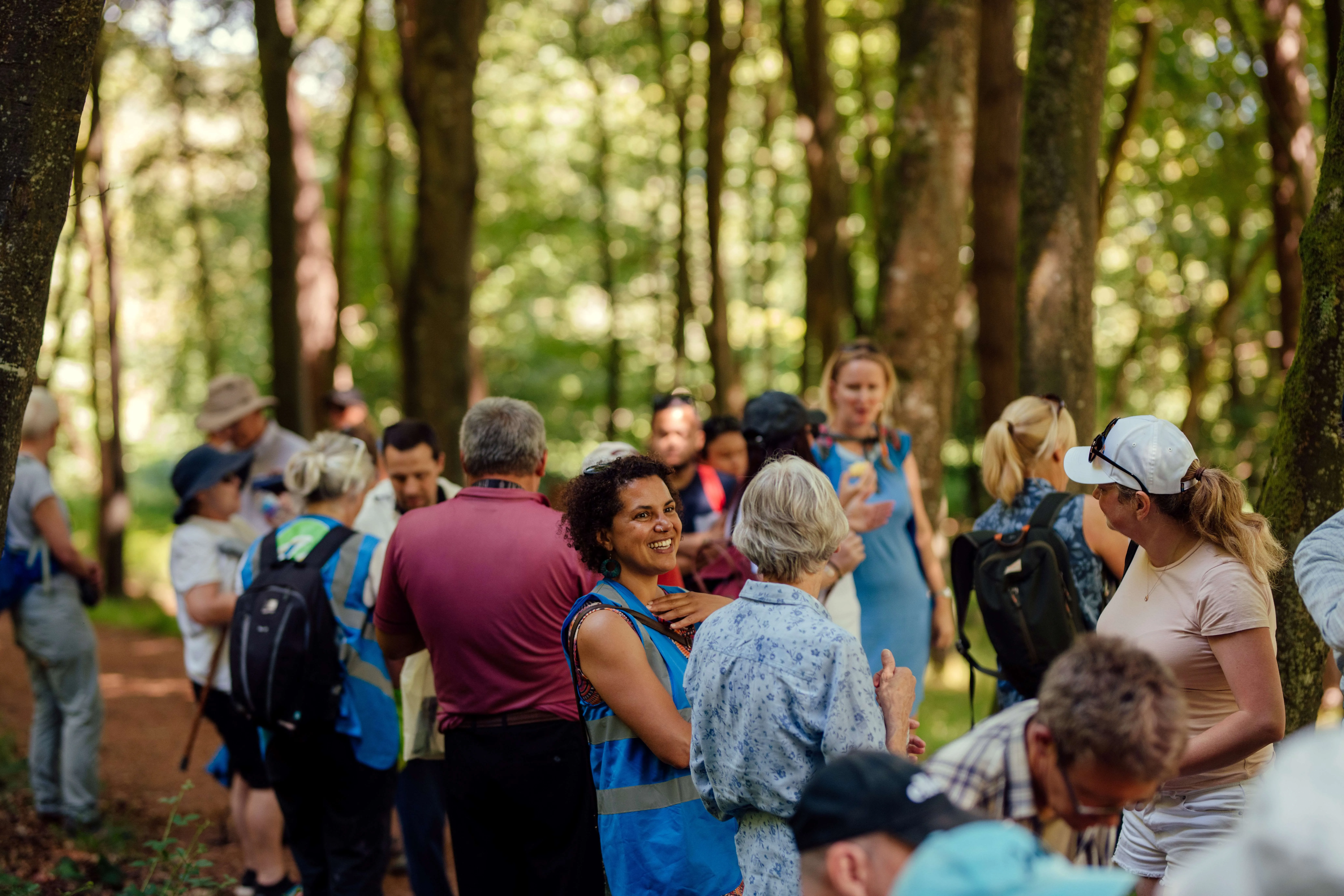
At National Trails UK, we believe access to nature is not just about paths and surfaces, but about who feels able, welcome and entitled to be there.
Barriers to accessing National Trails are often social, cultural and systemic. They can be shaped by language, representation, infrastructure and lived experience, as much as by gradients or gates.
In this guest blog, Anita Eade, charity leader and accessibility campaigner, reflects on a lifetime spent connecting with the UK’s National Trails and the UK's other protected landscapes.
Drawing on personal experiences of family, disability and wellbeing, and her work setting up some of the most successful accessibility programmes in the sector, she explores why access to the UK's National Trails matters for social justice, health and inclusion, and what policy makers, funders and delivery partners must do differently to ensure these nationally important landscapes work for everyone.
From leadership and representation to benches, language and children’s rights to nature, this is a call to think differently about access.
Growing up on the South Downs Way: A lifelong connection to National Trails
My first National Trail was the South Downs Way, explored with my dad long before I knew what National Trails were. Seen from my council estate window. Wading in the water at Cuckmere. My fondest memories of life with this amazing man are of holding his hand in the green and blue.
Protected landscapes - our National Trails, National Parks and National Landscapes - are a massive part of my professional and personal life. I’ve seen how time spent outdoors can transform wellbeing. My child’s Tourette’s tics and social anxiety disappear with a bimble in these spaces, replaced by joy over tiny shrews and thrills at standing on the highest hills. Walking, fast and slow, the King Charles III England Coast Path on New Years Day at Hove brought family and friends together. These landscapes heal people and bring meaning.
Why access to National Trails is a health, wellbeing and social justice issue
Ensuring everyone can access these benefits is central to my life and family, and has become my life mission. My husband has created thousands of accessible walks enjoyed by hundreds of thousands and our children all volunteer in these spaces.
I remember when I was working at the YHA, the 11-year-old who looked from the National Trail at YHA Truleigh Hill and asked ‘what’s that?’ It was the horizon. Imagine. And for those of you who think that this was a neglected child - he was not. But many of the things so many of us take for granted - access, transport, time - remain out of reach, as parents work 80-hour weeks to keep food on the table.
Removing structural barriers to nature: What access really means on the ground
At the YHA, I learned the importance of accessibility; and how with the right equipment, landscapes like Hadrian’s Wall Path can become possible for all. Brynn Hauxhall became the first person in a wheelchair to complete this National Trail, defying the view that these rockier, hillier, more remote parts of our protected landscapes are the preserve of a few.
Who shapes our landscapes matters: Representation, leadership and power
Access to these spaces also means representation in the roles that shape them. I helped set up the Women’s Leadership in Protected Landscapes network and was delighted to welcome the brilliant Polly Martin, Chief Executive of National Trails UK, as a speaker at virtual events, sharing fresh perspectives on leadership and providing a visible role model for those who rarely see themselves in such positions. This matters. My main role is not access. I am a charity director responsible for multi-million pound programmes. But my very position there as a disabled, queer, working class woman means others can see themselves.
Connecting National Trails, nature recovery and public benefit
In my current role at WWT, the charity for wetlands and wildlife, I continue to work to connect more people to our National Trails and wider protected landscapes. The Thames Path National Trail runs past WWT London offering opportunities to link the millions of people who use the trail with the superpowers of wetlands.
Living with disability on National Trails: when access gets personal
But this intertwining of my life with protected landscapes is now in a new phase. A disability means that the spaces I once ran through are now places that bring pain. From balancing on a crag, to tripping over a flower patch. From walking forever, to barely walking across the car park. So I have a number of asks of National Trails.
Ask One: Changing the language and imagery of National Trails
Language matters. Too often, the words used to describe National Trails, and landscapes more widely, are about conquering and challenge. Longer. Faster. Higher. Harder. This can unintentionally exclude those who move differently. My first ask of National Trails UK is simple: How can the words and images we use make everyone feel welcome?
I write a lot about being fat and fifty, not fit and fleecy (although I need some ‘s’ words as my children like to remind me, now that sixty is coming up.) What words do our National Trails use to make me welcome? And maybe these ‘s’ words come from some of the other things we can do in these spaces. Sit. Stare. Stay. Stargaze. Sing.
There is no right way to experience a National Trail
At Dovedale in the Peak District, I would look up at the long distance runners over the hills. But I also saw multi-generational families paddling, chatting and sharing meals. Some criticised them for ‘not enjoying the space properly’. Loud. Eating. Sitting. Singing. But inclusion means recognising the multiple ways to experience and connect with nature and I wonder, what could the lone runner learn about how to pause in nature and connect with others in blue and green spaces?
And I have seen first hand the value of cultural engagement. Projects like Nature Calling from the National Landscapes Association, that bring together poetry and art, different voices. And NTUK’s photography initiatives, that celebrate diverse ways to experience landscapes and in so doing broaden who feels welcome.
Ask 2: Benches, rest points and the infrastructure of inclusive access
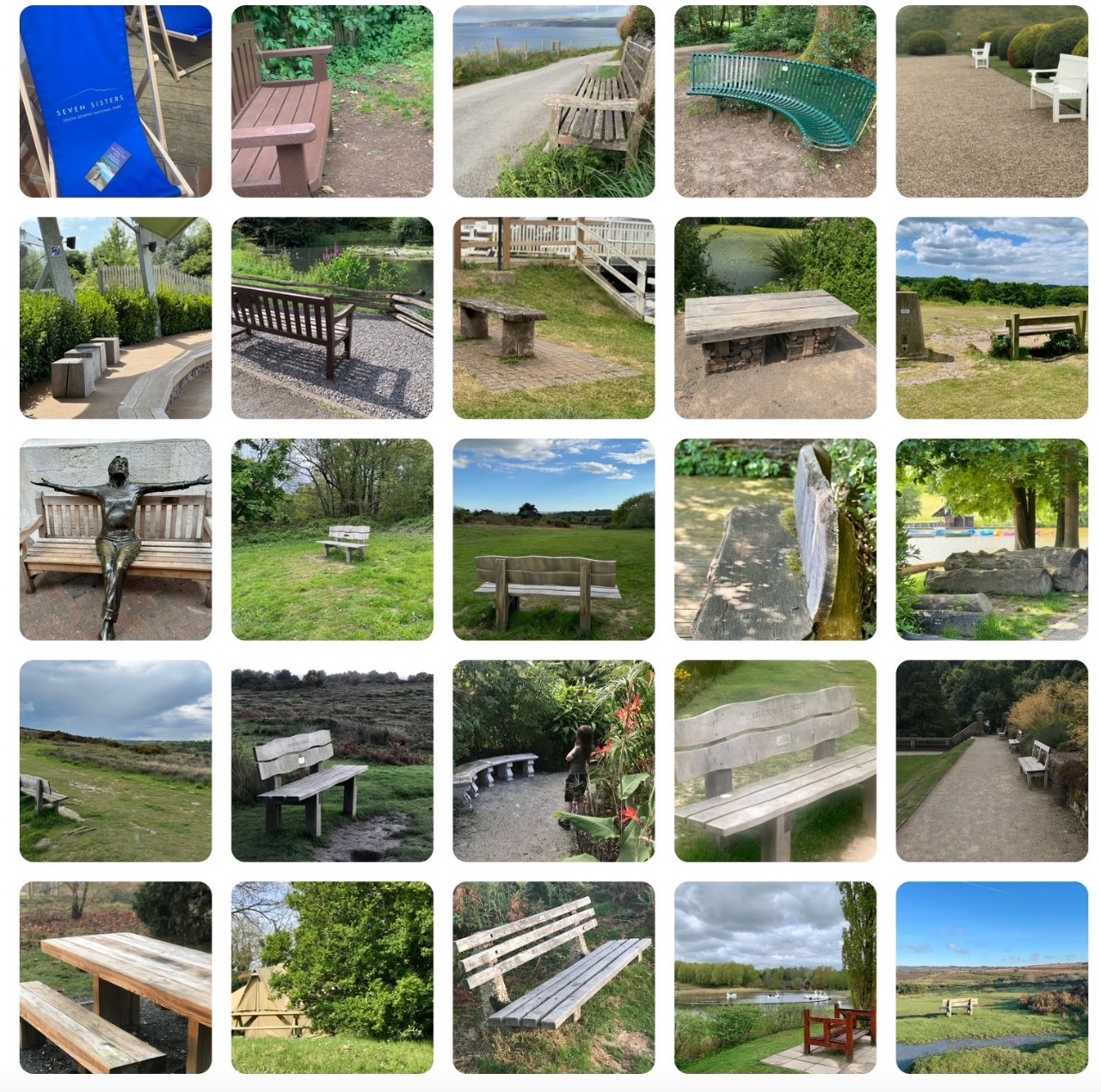
For the 75th Anniversary of the National Parks and Access to the Countryside Act 1949, I set a personal challenge, not to walk or wheel miles (and kudos to those who did). Mine was to sit on 75 benches. And that is my second ask. Benches are essential. Nice benches with views. I cannot get down to sit on the grass. Many cannot. So, benches please. Benches with distance markers to the next bench (yep many of us plan our routes this way.) Benches with art. Benches with guides to the view. Benches that speak, like the ‘We Hear You’ project in South Downs National Park, taking unheard voices into the landscape. Benches – did I mention benches?
Ask 3: Every child’s right to belong in protected landscapes
And the third thing. Well. Kids innit. I want every child to be given a map of our protected landscapes. A ticklist. A beautifully designed bucket list of places to go. Places to be. Places to shout loudly or sit quietly or both at once (kids can do that!). Places to wheel and places to walk. Not just as a map but as an entitlement. As a pass that says these places belong to you. They are yours.
Looking to the future of the UK's National Trails
These will be the kids who grow up leading, protecting and redefining how we connect with National Trails, Parks and Landscapes. These will be the kids who know the beauty of a sunset on the horizon. The poets and the artists. These will be the kids that set new challenges. Wheeling and walking. These are the kids who will fix nature, so that nature in turn can return that gift and fix them. These are the kids that show us whole new ways to learn from our National Trails, our National Parks and our National Landscapes – these jewels in our crown.
Whatever the future of designations and protections, committees and funding, these will be the kids who will forever be holding a hand on the cliffs above the sea on the South Downs Way National Trail.
More posts
_Abbie%20Merritt_lpr.jpg)
NTUK Procurement - Paths to Inclusion Evaluation Consultant
The people behind the path: How volunteers keep the Cotswold Way National Trail thriving
How National Trails helped me understand my AuDHD
Signup to our newsletter