How can we ensure our National Trails continue to welcome more and diverse people, now and in the future?
At National Trails UK, we believe the joy of exploring our landscapes should be open to everyone. Our long-distance routes offer some of the most inspiring countryside in the UK, but we know that disabled people and those using mobility equipment can still encounter real challenges along the way.
In this guest blog, Craig Grimes, National Trails UK Trustee and Managing Director of Experience Community shares lived experience, practical insight and a fresh perspective on what inclusive access can look like on National Trails, and how, together, we can help more people feel welcome on our trails.
Discovering the UK's network of National Trails
From a very early age I was lucky enough to experience the great outdoors through my parent’s love of hiking. We spent many a holiday in the Yorkshire Dales National Park and although I’d heard of and walked on the Pennine Way, I didn’t understand that the UK has a network of National and Long Distance Trails.
Returning to the outdoors as a wheelchair user
In 1997 my ‘walking’ life came to an end when I became paraplegic and a wheelchair user while at university. I had career changes and worked in international tourism for several years before eventually establishing Experience Community. The organisation is a not-for-profit and charity that helps disabled people access the outdoors and returning to my roots, our National Parks and Landscapes and of course, our National Trails.

It wasn’t long before I was working hand-in hand with colleagues in the Yorkshire Dales, sometimes on sections of the Pennine Way and Bridleway around Malham. I made films about routes disabled people could do and started to realise that different people want different things from our trails.
The “A” Word
Anyone who knows me, knows I dislike the “A” word; accessible… It’s hard not to use it, but it hasn’t been defined in any meaningful way for land managers or disabled people.
What I’m getting at is that access is a personal perspective, so it’s very difficult to make something accessible for everyone. Even our high streets aren’t accessible for some people, so how do we expect our National Trails to be?
Outdoor access is personal: One size doesn't fit all

Some people think that providing access to the outdoors is about providing flat, well-surfaced paths. And while these are welcomed by many disabled people, it isn’t the be all and end all of creating trails that are more suitable for more people.
Small tweaks to trails can make them much more accessible. Removing or replacing physical barriers such as stiles and kissing gates with gates that comply with BS5709 can make a huge difference. Even if the path to the barrier isn’t considered to be “accessible”, some mobility equipment might still be able to reach it.
There’s currently a Government Open Consultation into reviewing the law for powered mobility devices, which could pave the way for new innovative all-terrain mobility equipment to be developed and so improve access to our trails for disabled people.
From a trail management perspective, we need to start thinking about future-proofing our National Trails for products that are not available on the market yet.
Gradients, confidence and challenge on National Trails
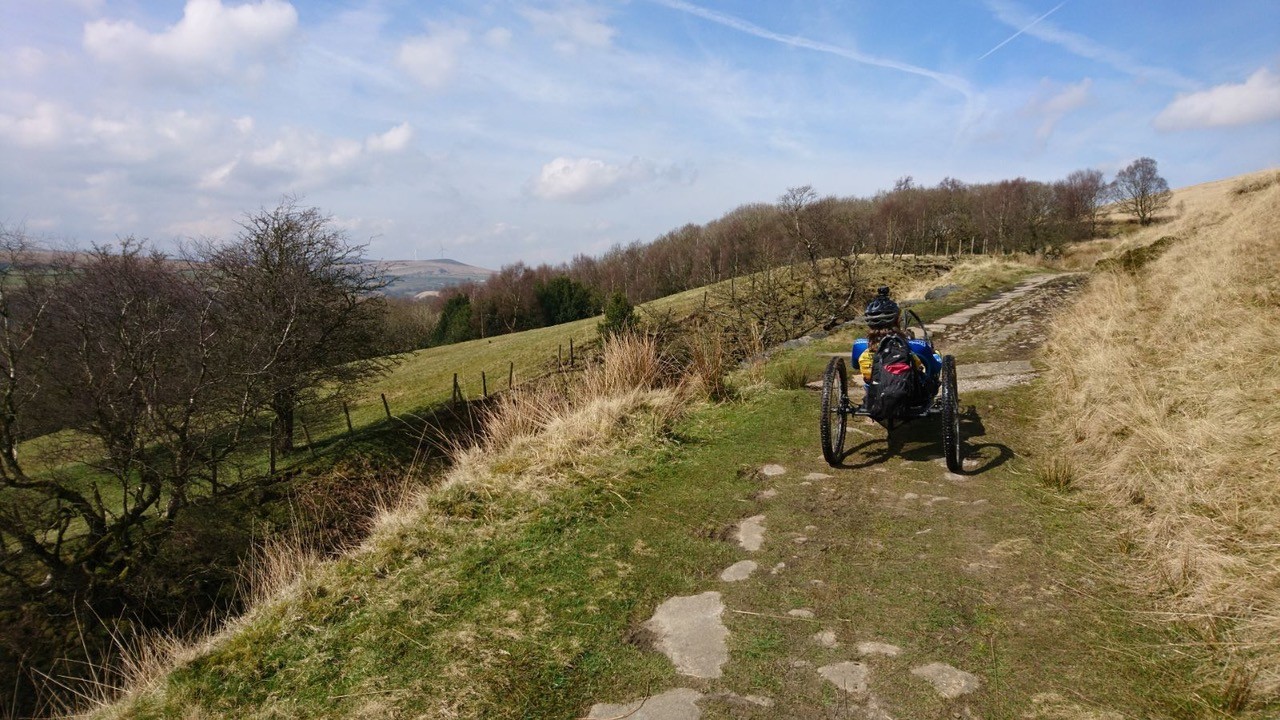
One of the main topics I’m asked about is gradients. How steep is too steep? There isn’t really an answer to this. It depends on the mobility equipment being used, whether you’re going up or down it and the confidence and skills of the user. Clearly, the shallower the gradient is, the more accessible it is for a variety of people. However, some people like the challenge of getting up a slope or the rush of coming down one.
For further information about our work at Experience Community, some of the mobility equipment we use and to see some of the terrain we tackle, you can watch our film “Access the Great Outdoors.”
Tins of worms and minefields…
So, if “accessible” doesn’t exist and different people want different experiences, how am I supposed to create suitable trail sections for disabled people? In a word, variety.
There are some very good free guidance documents out there that trail managers can use to help them better understand how to improve access. By All Reasonable Means: least restrictive access to the outdoors was updated in 2025 through a collaboration between Natural England and Natural Resources Wales and the Sensory Trust and is available in English and Welsh on the Sensory Trust Website.
The Paths for All Outdoor Accessibility Guidance, is the result of a collaboration between a number of UK organisations and reflects “a wider diversity of people and landscape, and to bring it in line with the Equality Act 2010 and other relevant legislation.”
Working with disabled user groups to improve National Trails
Working closely with local disabled user groups and outdoor access consultants from early planning stages can be of great benefit. Getting information from the horse’s mouth before you put spades in the ground or spanners on a gate can save a lot of heartache.
Other stakeholders should also be considered, especially if the stretch of trail is a bridleway and the potential improvements could impact negatively on mountain bike and horse riders.
Auditing the Cotswold Way National Trail: Lessons learnt
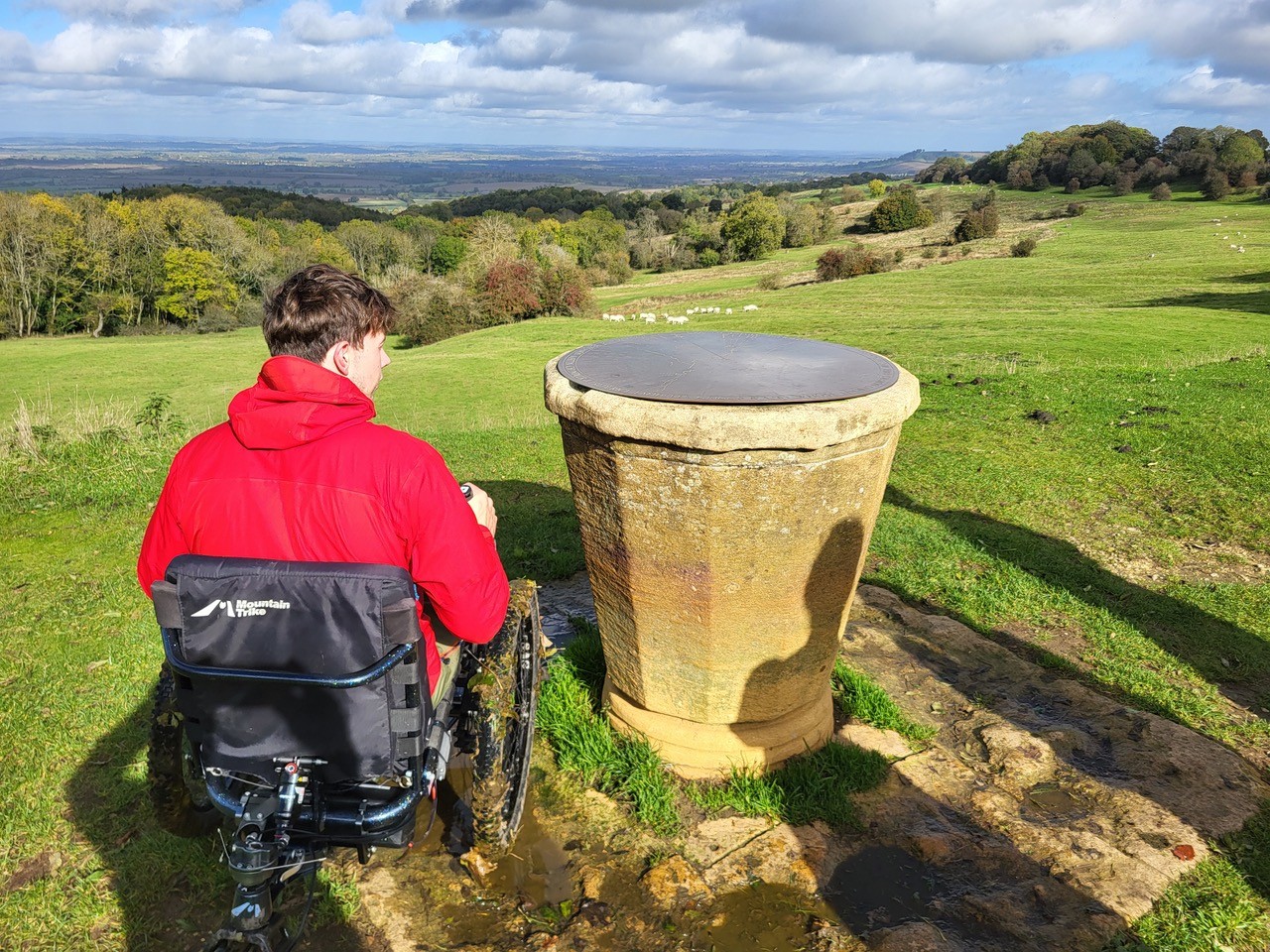
Over the last year Experience Community has been working with the Cotswold Way to audit the full 102 miles of the trail. It’s been quite a task and there’s been lots of learning along the way.
Our main recommendations to the National Trails team was to start by replacing barriers on the route such as stiles and kissing gates with gaps or gates that comply with BS5709. By doing this, as legislation (hopefully) changes and mobility equipment technology improves, more disabled people will be able to access the trail.
Prioritising popular Trail sections
Where the terrain was particularly steep and has erosion issues, we sought diversions along other public rights of way to ensure that people could get a feel for the trail and experience the landscape it passes through.
We also recommended that the team concentrate on upgrading the most popular sections where there is a range of supportive infrastructure such as suitable accommodation, adapted toilets and blue badge parking.
Through the funding from the Protected Landscape Partnership (PLP), I’ll be running 2-day Least Restrictive Access Courses at RSPB Arne and the Yorkshire Wildlife Trust’s Potteric Carr in April. If you’d like to find out more, please do get in touch with Saskia Luqmani, at the PLP: Saskia.Luqmani@naturalengland.org.uk
Access isn't just physical: Making people feel welcome
Creating access on the ground is one thing, but then we need to make people feel welcome and invite them along for the ride.
The Pennine Bridleway National Trail team made a promotional film about the trail and included a variety of users including myself, families, walkers, cyclists and equestrians to show the range of people who can use it.
It also provided an opportunity for the team to show people some of the facilities along the trail, the variety of surface conditions and some of the amazingly beautiful landscapes people can experience.
We’ve also previously worked with the Yorkshire Wolds Way National Trail to audit several circular routes involving the trail, which opened up a landscape that I didn’t even know existed. I was keen to share this with disabled participants from Experience Community, so we got involved in the local walking festival and took groups out on a variety of walks.
By working with the National Trail team to audit and support people on to the trail through an organised event, many more disabled people have been able to visit the truly spectacular dry chalk valleys of East Yorkshire.
Mobility equipment routes
Our National and Long Distance Trails have a lot of potential to provide a range of routes for disabled people. From the disused railways lines of the Tissington and High Peak Trails on the Pennine Bridleway, with supporting infrastructure and mobility equipment hire, through to more technical and arduous terrain found on trails such as Offa’s Dyke Path National Trail, where we’re just starting work to identify sections that can be completed using mobility equipment.
Working with Natural Resources Wales we’ve created multiday walking and cycling itineraries along the Wales Coast Path that are now actively being supported and promoted by Visit Wales.
Working together, one change at a time
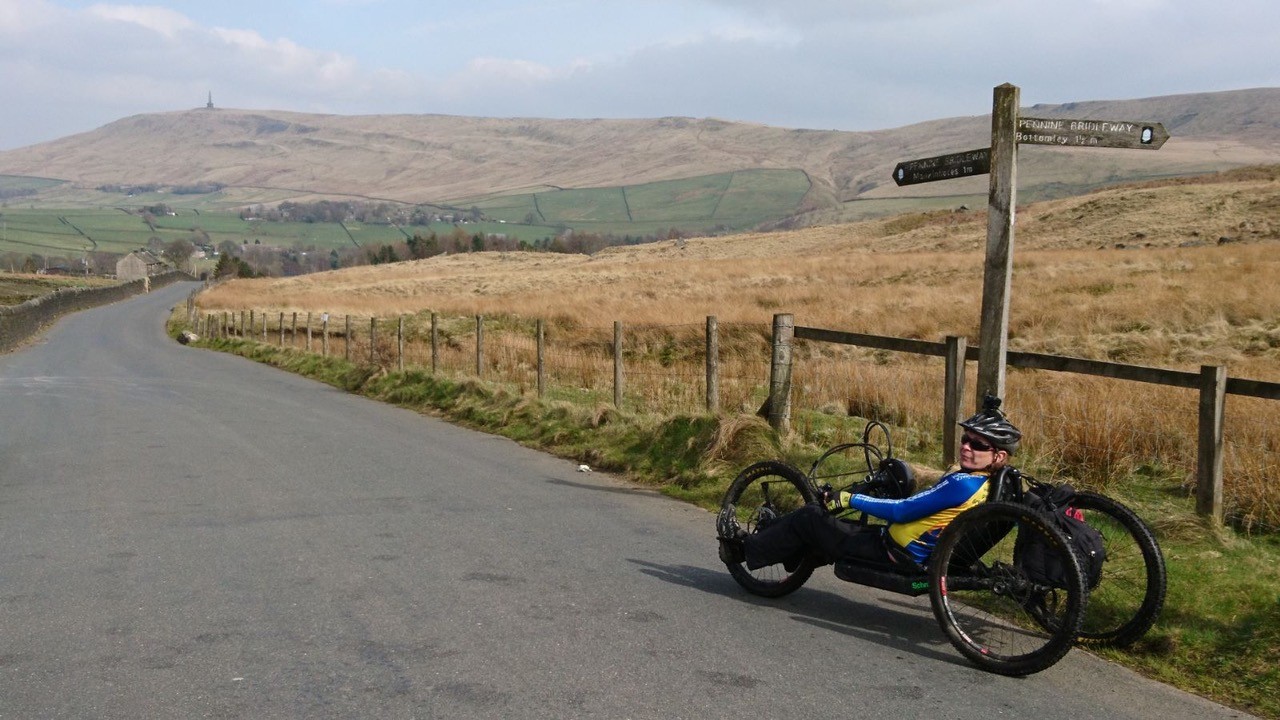
At the end of the day, my ask is simple: keep listening, keep experimenting, and make small changes where you can. By working together and thinking about the variety of people who use our trails, we can make experiences possible for more people, one change at a time.
Main image is Craig Grimes on the Pembrokeshire Coast National Trail, looking out over Broadhaven South Beach in Wales.
More posts

VACANCY - Communications Officer (Coastal Wildbelt)
.jpg)
NTUK Summit 2026 - Innovation on the National Trails
_Abbie%20Merritt_lpr.jpg)
NTUK Procurement - Paths to Inclusion Evaluation Consultant
Signup to our newsletter