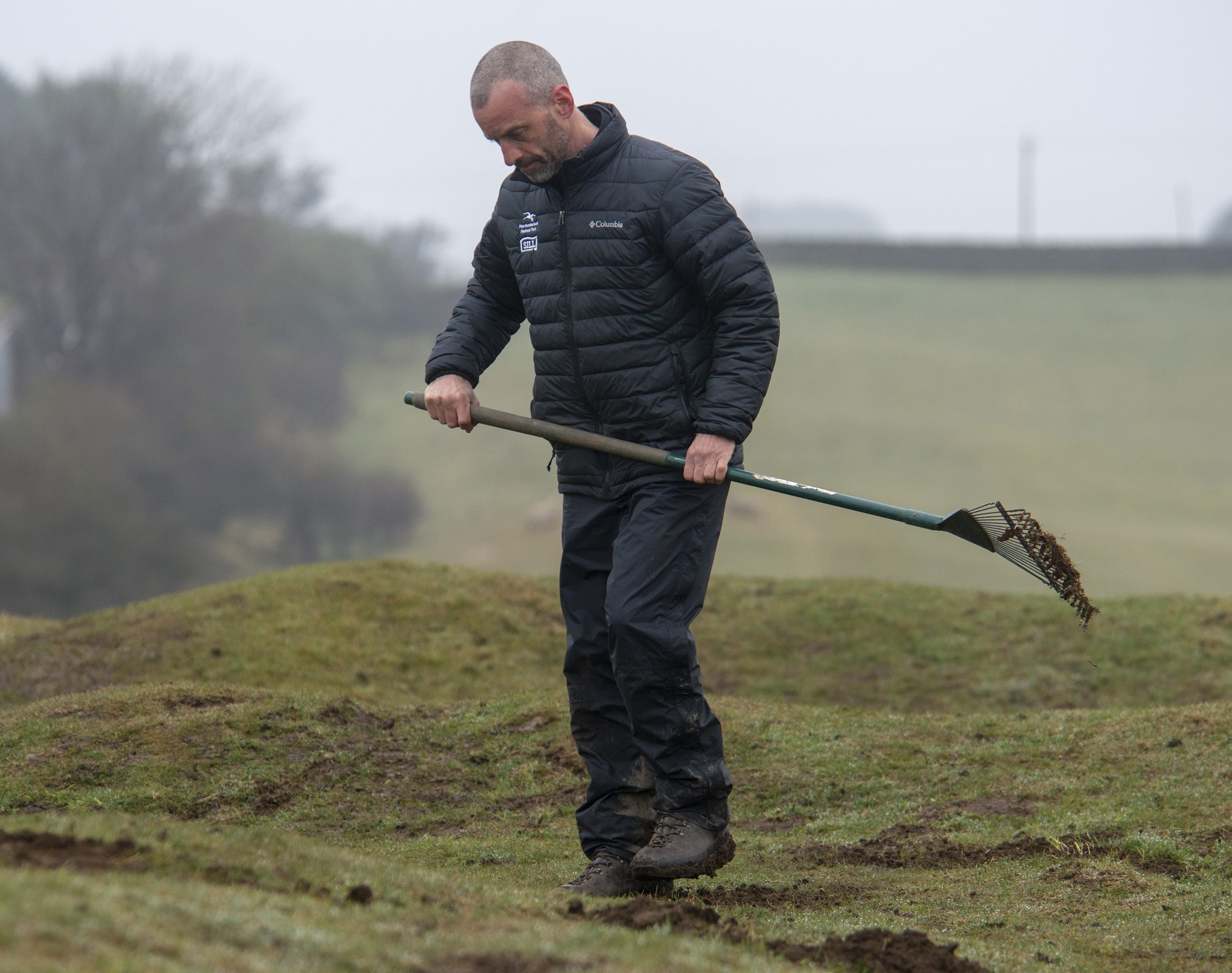
If you’ve ever walked along Hadrian’s Wall Path National Trail, there’s a good chance you’ve unknowingly crossed paths - literally or figuratively - with Gary Pickles, the National Trail Ranger who’s spent more than a decade caring for one of England’s most iconic landscapes.
Gary’s job goes far beyond checking gates and cutting grass. As he’ll tell you himself, a National Trail today is so much more than a line on a map linking point A with point B. With the right investment and partnerships, National Trails like Hadrian’s Wall Path are becoming vital spaces for nature recovery, climate resilience, wellbeing, inclusion, education, and economic prosperity, and in the case of Hadrian's Wall Path, all while protecting a UNESCO World Heritage Site and an ancient monument.
In this Q&A, Gary lifts the lid on what it really means to care for a National Trail in 2025.
Gary what’s it like managing Hadrian’s Wall Path National Trail?
I’ve been in post for over 10 years now, with around 25 years’ experience working in the outdoors. Unlike previous roles where I was based in one place, this job has me constantly moving through the landscape, just like the National Trail itself.
Because the National Trail sits largely on top of a Scheduled Ancient Monument and within a UNESCO World Heritage Site, a huge part of my job is building relationships, with landowners, councils, Historic England and National Landscapes teams. And working through the extra layers of care and permissions needed to look after such a precious place.
I often joke that my job is “cutting grass and digging holes,” but the truth is I love the challenge of working on a site that’s been managed for nearly two millennia. In many ways I see myself as simply the next in a very long line of caretakers.

What does a typical day look like… if such a thing exists?
People ask me that all the time, and the honest answer is: there’s no typical day, only a typical year.
Here’s the rough rhythm of the job:
• January – March: Hedge cutting to maintain path width, and repairing the walked surface
• April – September: Grass cutting (lots of it!)
• October – December: Surveying, repairing and replacing infrastructure - fingerposts, gates, signage
And all year round, I mix in guided walks, talks for schools and universities, volunteer sessions, partnership work… every week is different.
What’s the best part of the job for you?
It’s the mix of it all: the landscapes, the problem-solving, the sense of continuity. After managing the National Trail for over half its life, I can see how dozens of small improvements over the years have added up to something really meaningful for users, wildlife and heritage.
You’ve built a strong social media following. How does that fit into the role?
Ten years ago, people would email through the National Trails’ website. Now, most interactions come through social media, often instantly. To keep up, I’ve had to develop a social media presence, which has turned into a surprisingly fun part of the job. The stories that resonate the most with my followers are anything that brings Hadrian’s Wall Path National Trail to life.
Behind-the-scenes fixes, nature moments, snippets of history, or simply the reality of being out there in all weathers. People love seeing that the National Trail isn’t just “there”, that it’s actively cared for. Sometimes I’ll post videos of repair jobs to show our followers how things are done and give an understanding of the work that goes on behind the scenes to help maintain and manage the trail.
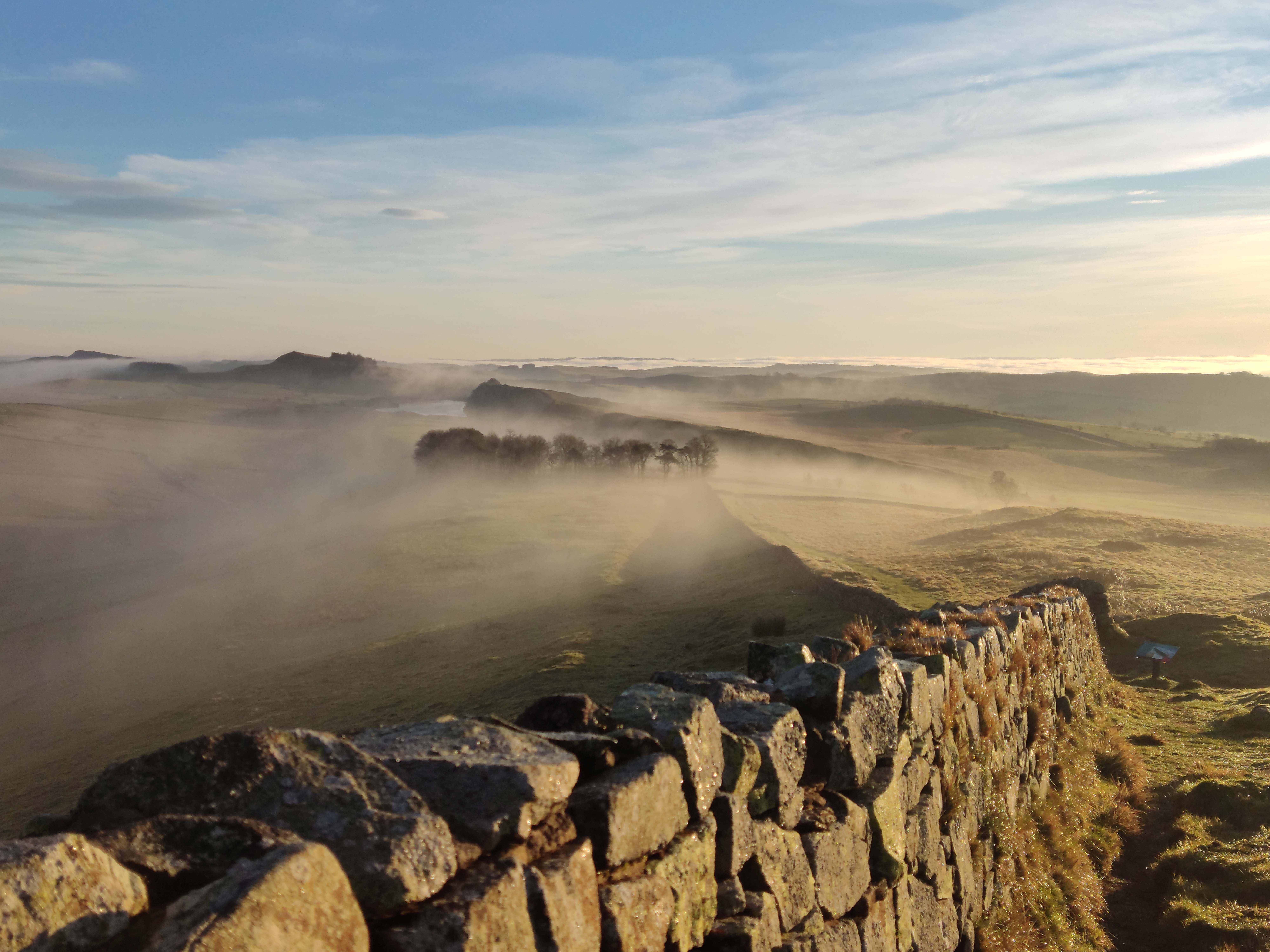
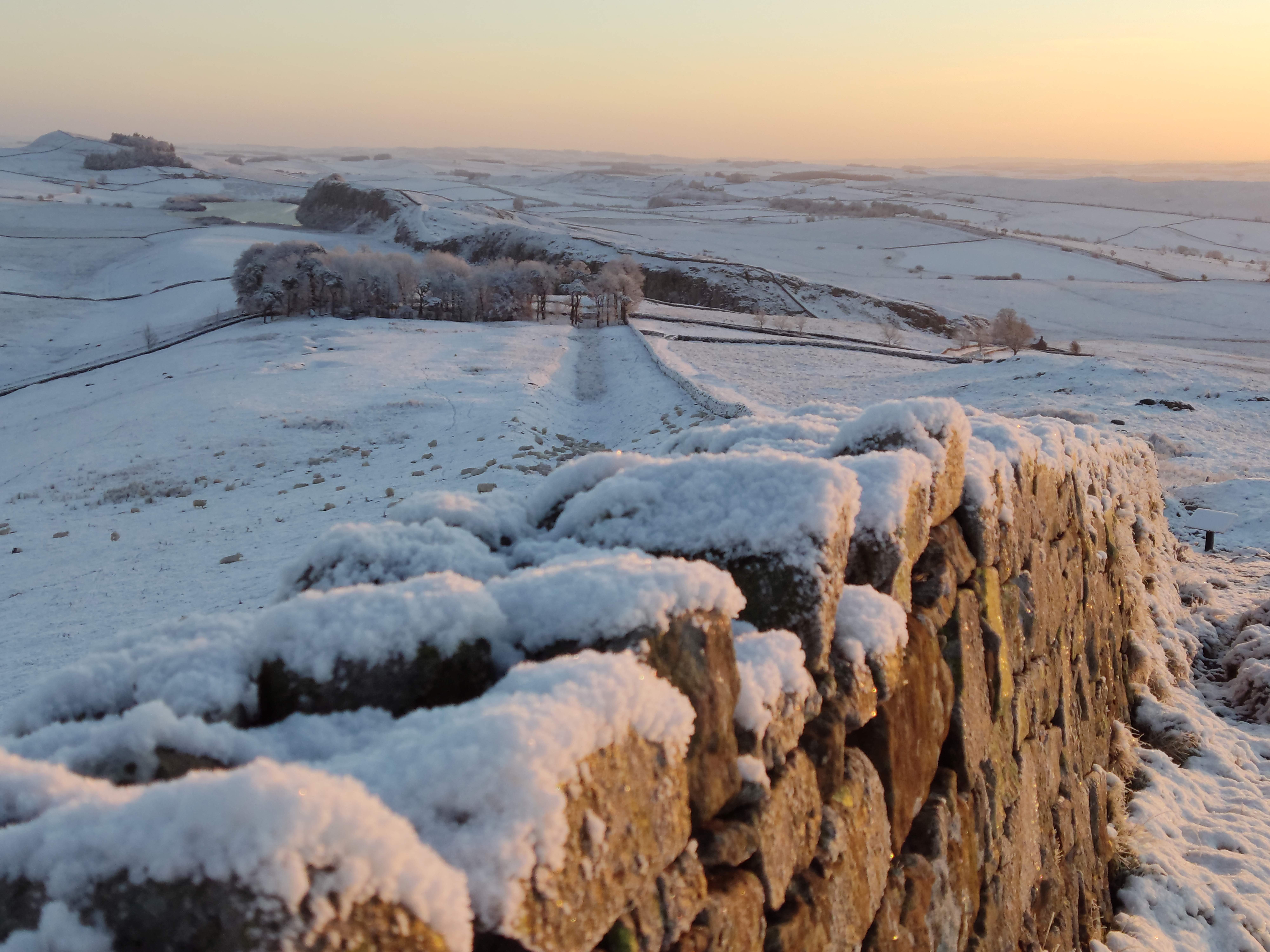
The most popular posts on our social media are big landscapes with rolling morning mist that you tend to get around late autumn. If you can accentuate the picture with the rising sun to wash the whole scene in colour, then you’re onto a guaranteed winner. Perhaps eclipsing these posts are everyone’s favourite… fresh fallen snow on a clear day… perhaps with Hadrian’s Wall in the scene to help tie it all together.
How has your role changed over your decade on Hadrian’s Wall Path National Trail?
The National Trail was 11 years old when I started; now it’s heading for 23. That’s long enough to see real change.
• Users have changed. People now use the National Trail for wellbeing, community, skills development and volunteering. Not just end-to-end walking.
• Engagement has changed. Social media has made interactions more immediate.
• Opportunities have changed. With long-term improvements in place, we can now take on bigger, more strategic projects with partners and funders.
Can you give an example?
One standout example is the Landscape Enhancement Initiative (LEI). This project delivered over £100,000 of improvements, strengthening both the National Trail and the wider landscape around it.
The LEI didn’t just happen overnight. It builds on the decade of steady work and strong relationships built with the statutory bodies and landowners. By being sympathetic to the needs of the National Trail, farm tenants and archaeology, we’ve been able to deliver consistent and high-quality management.
By tackling much of the essential infrastructure work early on, we created a buffer. That’s now giving us space to step back and develop bigger, more ambitious, landscape level projects. It all comes down to consistent management that lasts. Instead of constantly reacting to problems, we can plan ahead and work proactively.
One of the clearest signs of success? The project worked so well we’re now developing a follow-up scheme, funded by the Hadrian’s Wall Passport Scheme – whereby walkers buy a passport and collect stamps along the trail and so help fund the care of the National Trail and its landscape.
What did the Landscape Enhancement Initiative achieve?
The LEI itself focused on a substantial stretch of surface repair along the central section of the trail. The aim was simple but vital: protect the archaeology while creating a medium to long-term maintenance solution. This meant airlifting in over 100 tonnes of materials and having an archaeologist on site throughout the works.
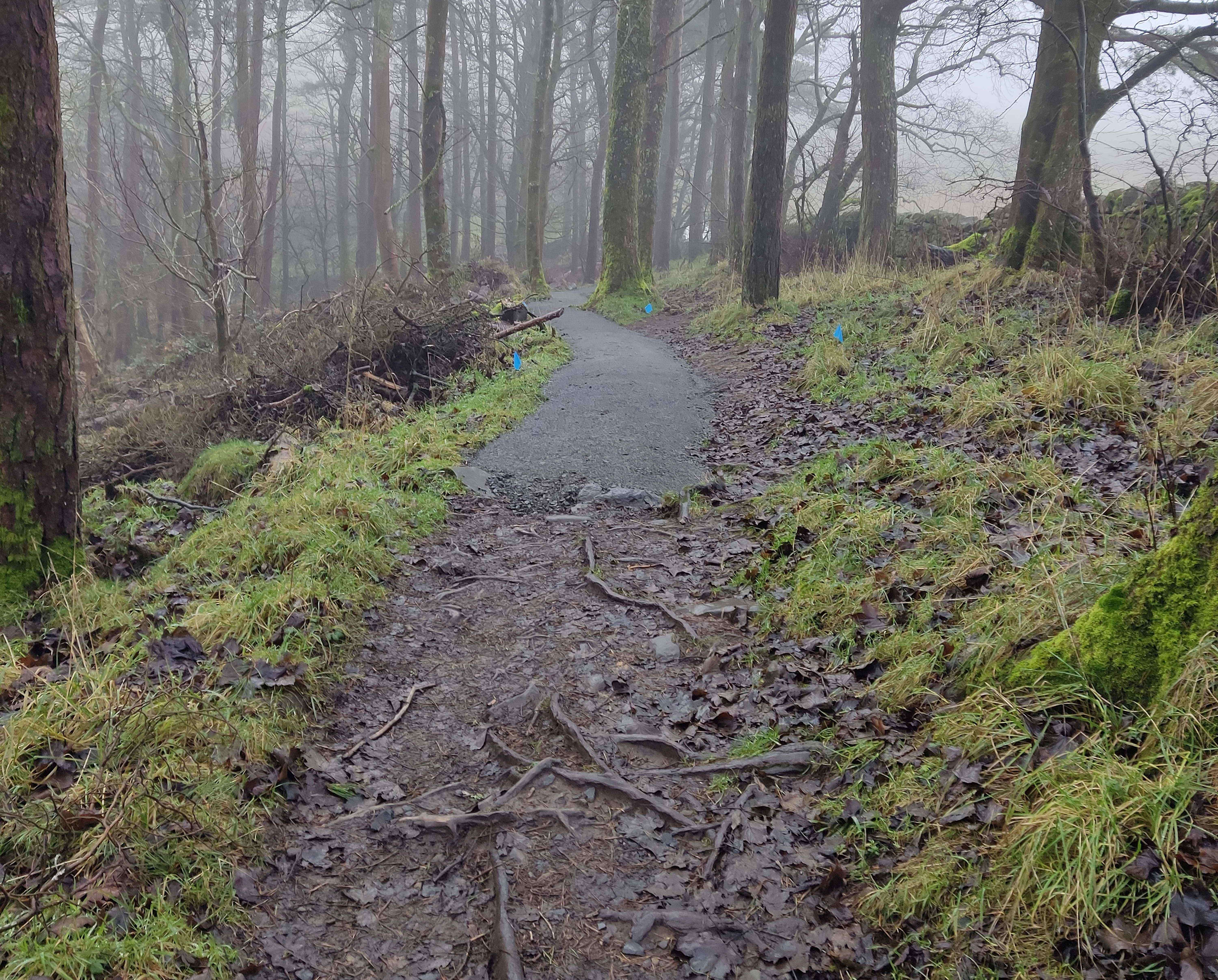
We've ‘re-dressed’ existing aggregate paths using a blend of stone and soil and added a series of ‘breaks’. These act like shallow steps, slowing water flow and preventing material from being washed away during wetter months. This was especially important as the path sits largely on bedrock, with very little soil depth.
This section is heavily used and contains sensitive surface archaeology, so finding a sustainable path solution was crucial.
A few years on and the results speak for themselves. The new/renewed path is bedding in sympathetically with the landscape and the project feels like a real success.
How are you making Hadrian’s Wall Path National Trail more inclusive and welcoming?
We’ve put a big focus on working with diverse groups. Thanks to years of relationship-building and looking into new opportunities, we now partner with:
• Newcastle University
• Local rural and urban schools
• Dads and Lads Northeast
• Northeast Sight Matters
• Healthy Parks Healthy People
This matters because things change and as a public service, we need to change too. By adapting how we work and building strong relationships with local communities and visitors alike, we can make the trail more welcoming, meaningful and beneficial for everyone.
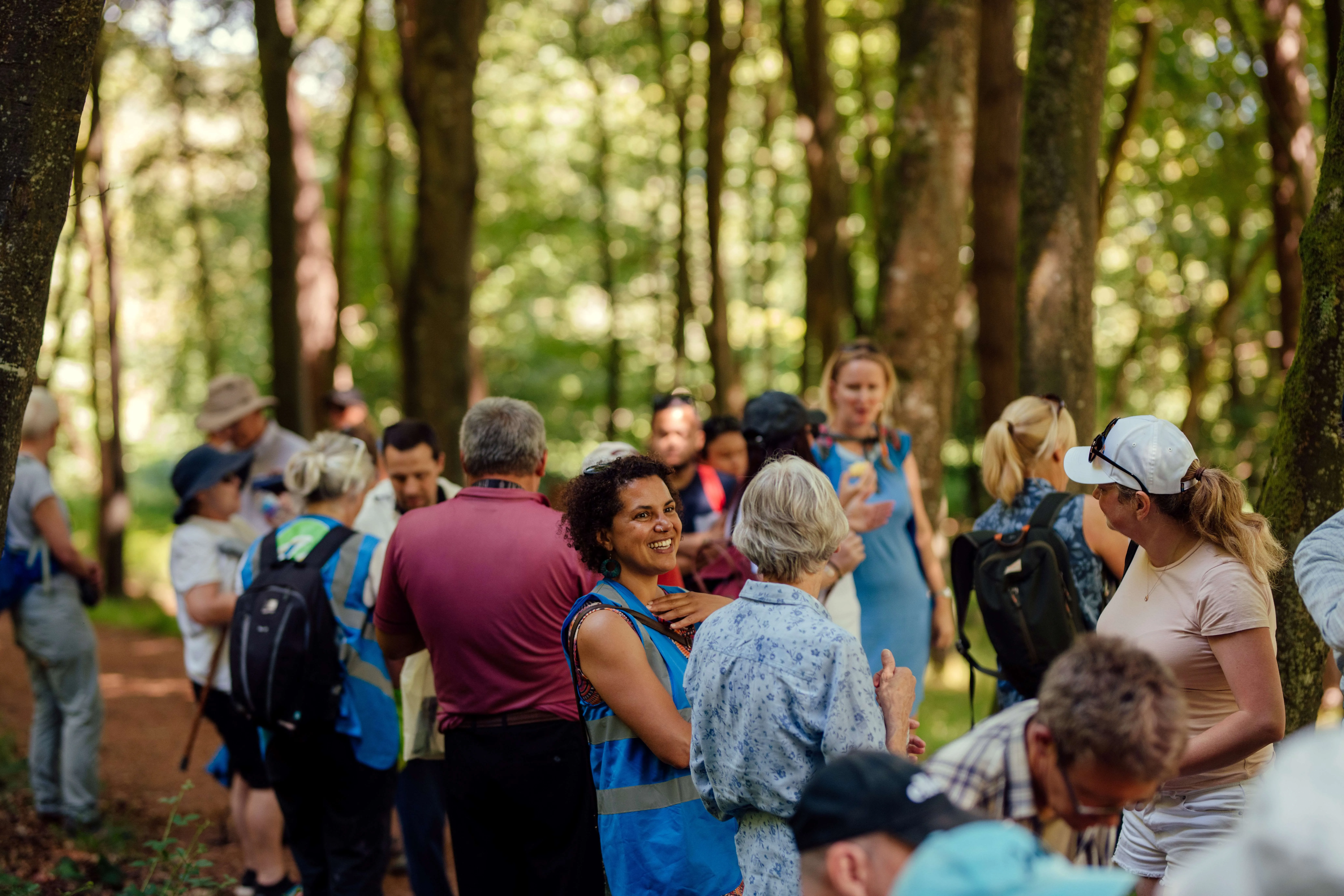
Our volunteers are a great example. Some have lived here all their lives and as children played in places the National Trail now passes through. Their deep local knowledge, shaped by decades of change, helps bring the landscape to life and adds a rich human story to the walk.
Sharing these stories turns the trail into more than a route from A to B. It becomes a space for connection, reflection and belonging. For some it is a way to reconnect with their own past. For visitors they can experience the place more deeply. For others, it’s a gentle transition from urban life into open countryside - offering space to slow down, clear the mind and feel the wellbeing benefits of time spent outdoors .
It has been brilliant to see more people enjoying the National Trail in ways that support their mental and physical wellbeing, not just their step count.
Hadrian’s Wall Path also performs a vital role in preserving our cultural heritage. What’s it like managing a National Trail that sits on a World Heritage Site?
A privilege and a challenge. Everything requires careful planning and collaboration, because any work has to respect the scheduled ancient monument beneath our feet. Put simply, your right of access has the potential to cause harm to the underlying archaeology. So, this juxtaposition fuels our creativity for solution.
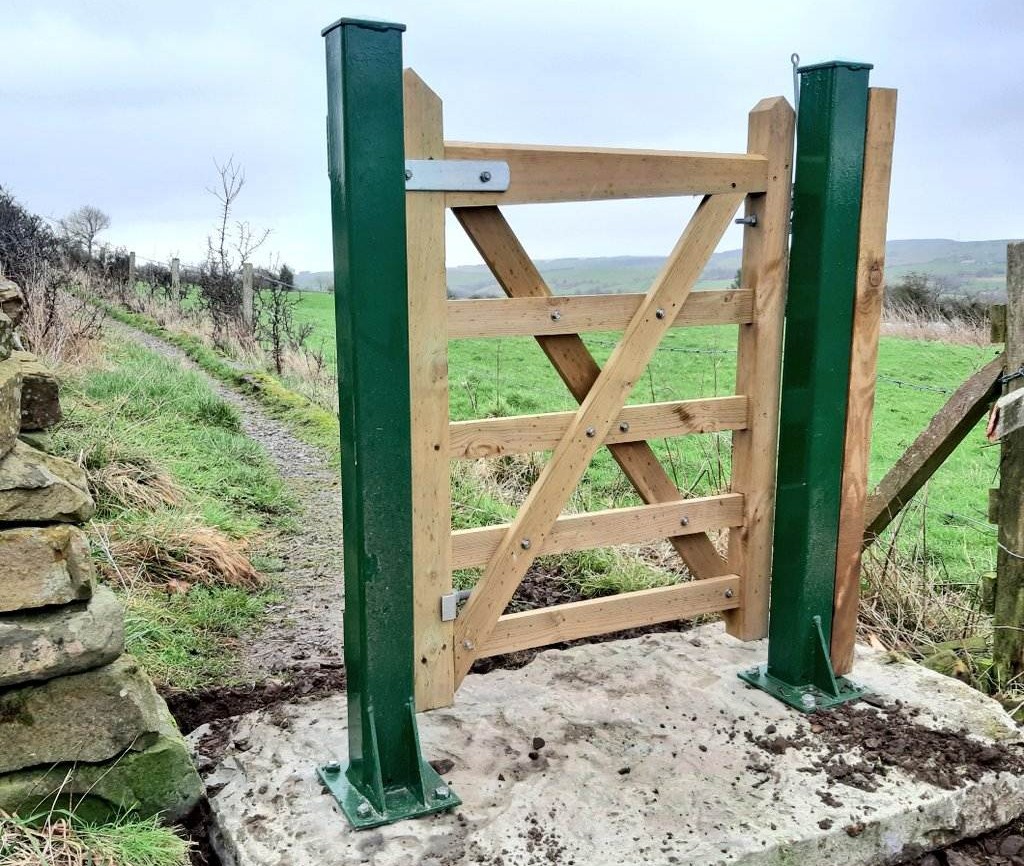
A good example is the Gate-on-a-Slab solution. We needed to repair a stile but didn’t want a like-for-like repair. But we also required Scheduled Monument Consent to dig new holes. The holes for a stile differ from those of a gate and one cannot just be exchanged for another. As the walked surface had been built-up, we suggested removing the base material and sitting an old millstone flag into the space and then bolting on wicket gates. It was a win win. We improved access without any new digging on the monument.
Using molehills is another way of making repairs to the path without impacting the monument. We can’t simply dig up the adjacent ground to collect earth to make repairs. So instead, we wait until the moles are active and then we can harvest their molehills and make localised repairs. And because the soil is specific to its location, it can be moved freely from field to field or from farm to farm. This is an excellent activity for volunteers as it’s a case of many ‘hands make light work’. It also brings with it a real sense of working for the betterment of the National Trail, supporting Hadrian’s Wall itself, as well as boosting wellbeing among the volunteers.
My advice to others managing National Trails with heritage assets? Be patient, build relationships, communicate early, and see the archaeology as a partner rather than a constraint.
What projects are you excited about right now?
The continued development of large-scale improvement projects like LEI, as well as new Test and Trial-style initiatives that support nature recovery and climate resilience. Working with NTUK has opened the door to more ambitious, forward-thinking ideas.
An interesting project we’re undertaking right now is to renew all our people-counters. This will give us a more relevant or up to date number of trail users. And hopefully, if placed well, an understanding of trail-completers, central visitors (Northumberland National Park and National Trust and English Heritage) and local users.
We're looking at improving access whenever possible, working with landowners and tenants to replace stiles with gates and for those gates to be wicket style rather than kissing.
What does the Hadrian’s Wall Path want to be?
If I had to say what I thought the National Trail’s future would be, I would say one of connecting people and communities. We are a World Heritage Site and predominately sit upon a Scheduled Ancient Monument known around the world. And so, we are a destination for those chasing memories of the past, who travel from afar to see and walk this most ancient of things.
We are an artery that helps bring economic prosperity to the rural areas, as well as wellbeing and access to the countryside to those from the urban areas. We are a way of connecting with people’s pasts and allowing them to share that past with a wide range of diverse users. Finally we can be an outside classroom to better understand the history of where, how and what we are. The industrial shipbuilding, coalmining, farming and the rural and urban economies that have all shaped this region, can all be seen along the route of Hadrian’s Wall National Trail.
This is what a National Trail can be when properly supported: a catalyst for nature recovery, wellbeing, access, and local prosperity.
If you could wave a magic wand for funding, what would you wish for?
I feel the one thing that would improve the future for Hadrian’s Wall Path National Trail would be longer term funding. When I originally started, we got our funding in a 3-year block and that enabled us to plan, fund and then deliver larger projects. Working within a World Heritage Site and a Scheduled Ancient Monument this is particularly important.
What’s been your highlight of 2025?
Some of the highlights of 2025 are…
• Hosting a working/knowledge sharing visit with Offa's Dyke National Trail, associated partners and other National Trails
• Working with a greater variety of users
• Seeing the bedding-in of some of the larger projects and planning out some future projects based of these proven successes
What are the benefits of being part of the National Trails UK family?
Working with National Trails UK gives us a platform to protect and promote our National Trail at a national level, something that’s increasingly important as visitor numbers rise and expectations change. I’d love to see this collaboration grow even further.
We can’t end without mentioning Sycamore Gap. You were the first to raise the alarm. What does the future hold?
Sycamore Gap has become a focal point on Hadrian’s Wall Path National Trail and with the new growth from this year and briefly, the year before, the future looks bright for the iconic tree. The long-term goals for the tree belong to the National Trust as the landowner, but from the point of view of the National Trail, it’s comforting and exciting to see how the story of the tree unfolds in the coming years
Want to hear more from Gary?
You can listen to Gary talk in depth about Managing a National Trail within a World Heritage Site here:
WallCAP Speaker Series: Management of a National Trail Within a World Heritage Site by Gary Pickles
Twitter or X @hwpath
Instagram @hadrianswallpath
Threads @hadrianswallpath
More posts
_Abbie%20Merritt_lpr.jpg)
NTUK Procurement - Paths to Inclusion Evaluation Consultant
The people behind the path: How volunteers keep the Cotswold Way National Trail thriving
How National Trails helped me understand my AuDHD
Signup to our newsletter