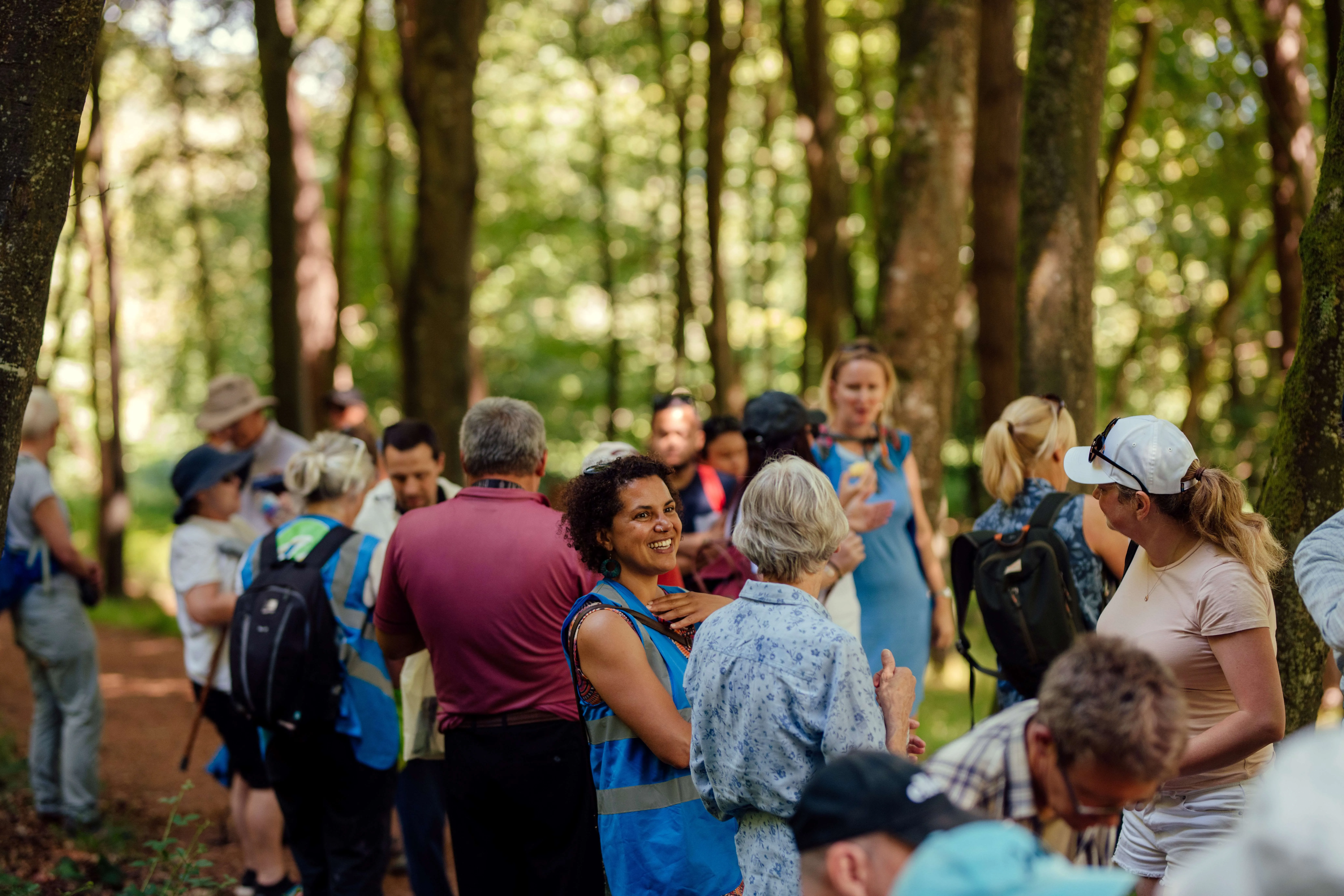
How can National Trails support nature recovery while continuing to connect people with some of the UK's most treasured landscapes?
National Trails UK Nature Recovery Programme Manager Hannah Brightley reflects on the opportunities, challenges and partnerships helping to make it happen.
Why nature recovery and access belong together on our National Trails
_Roxanna%20Barry-32_lpr.jpg)
What takes you to a National Trail?
A picnic with your family? A weekly running route? An epic holiday hike? Or simply a quiet moment of reflection?
Whatever the reason, many of us head outdoors hoping to spend time in nature, whether consciously or subconsciously. It might be the sweeping views across a dramatic landscape, a skylark raining song down from above, a bee moving between wildflowers, or the gentle sound of a stream beside the path.
National Trails have long helped people connect with some of the UK's most treasured landscapes. For decades, Trail teams, volunteers and partners have worked tirelessly to ensure these places remain accessible, safe and enjoyable while carefully managing impacts on the habitats and wildlife that make them so special.

The recent upgrade and opening of the Coast to Coast Path National Trails is a great example. Significant effort went into planning a route that minimises impacts on protected sites, including sensitive peatland habitats, while creating a trail that can be enjoyed for generations to come.
But today, we face new challenges.
With biodiversity loss, climate change and growing health and wellbeing needs all affecting our communities and landscapes, it’s no longer enough simply to protect nature. We need to actively restore and create habitats, support wildlife recovery and build more resilient landscapes for the future.
This need for action is reflected in the UK Government’s commitment to support the global 30 by 30 target, which aims to effectively conserve and manage 30% of land and sea for nature by 2030. Achieving that ambition will require more than protecting individual sites. It will depend on creating bigger, better, and more connected habitats across whole landscapes, helping wildlife move, adapt and thrive.
The good news is that our National Trails are uniquely placed to help make that happen. They can play an important role in supporting that connectivity while continuing to provide high-quality access to nature for millions of people.
From protecting nature to restoring it on our National Trails
_Roxanna%20Barry-13_lpr.jpg)
National Trails sit at the point where people and nature meet every day.
Traditionally, access and conservation have sometimes been seen as separate priorities, each with their own pressures and challenges. Trail teams focus on creating great visitor experiences and maintaining safe, accessible routes. Ecologists and nature recovery specialists focus on restoring habitats, supporting species and improving ecosystem resilience.
While the approaches may differ, the destination is the same: healthy, thriving landscapes that people can enjoy now and in the future.
Increasingly, we're seeing what becomes possible when these perspectives come together.
Rather than viewing access and nature recovery as competing interests, we can design projects that deliver both. When people work together from the outset, projects often become more efficient, more cost-effective and ultimately deliver greater benefits for both people and wildlife.
Of course, this isn’t always straightforward. National Trails and their partners are operating at a time of reduced public funding, changing local government structures and increasing demands on already stretched teams. Across the sector, people are being asked to deliver more with less.
That raises important questions. How do we deliver strategically when funding and resources are limited? How do we embed nature recovery into access projects, and access into nature recovery projects, rather than treating them as separate ambitions?
For me, the answer lies in integrated trail management. By thinking about these outcomes together from the start, rather than as competing priorities or end-of-project add-ons, we can make the most of the resources we have and achieve greater benefits for people, nature and place.
Thinking differently: integrated trail management
This idea of integrating access and nature recovery is not entirely new.
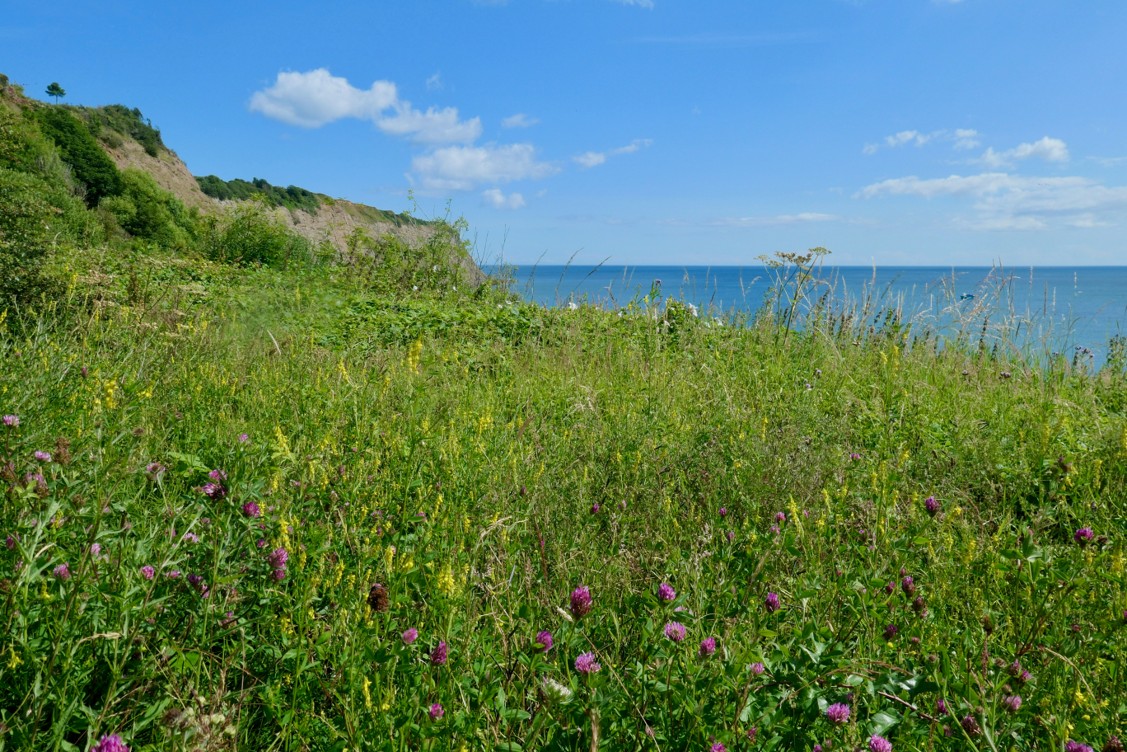
Across the National Trails network, Trail Officers, Rangers, volunteer coordinators and volunteers have already delivered fantastic work, restoring wildflower meadows on the Cleveland Way, planting hedgerows beside Offa’s Dyke Path and restoring the Pennine Way’s neighbouring peatland. Many of these projects are now being captured through the growing National Trails Nature Corridor Map.
To support the brilliant ideas bubbling away out there, we launched a special fund – the Test and Trial Fund. It backed quick, creative experiments that made a difference and is being used to show what works, so that future investment can be targeted more effectively. You can read more about the sort of projects we’re supporting here and here.
What is changing is the scale of our ambition.
The question is no longer how we deliver individual projects, but how we create connected nature corridors for people and wildlife across entire National Trails and ultimately across the UK's 5,500-mile National Trail network.
How do we move from isolated interventions to a strategic approach that supports both access and nature recovery at landscape scale?
What do we mean by a 'nature corridor'?

The National Trails do not own the land they cross, so one of the questions I am most often asked is: 'How wide is a nature corridor on a National Trail?'
After more than two years of the National Trails Nature Recovery Programme, the honest answer is that there is no single answer.
The opportunities vary enormously depending on funding, available resources, willing landowners, volunteer involvement and the habitats or species involved.
We are fortunate that with the opening of the King Charles III England Coast Path also comes the designation of its open access corridor, ‘the coastal margin’. The first designated trail corridor in the UK, posing an exciting opportunity through our Coastal Wildbelt programme of delivering outcomes for people and nature at scale.
But where designated corridors like on the coast path don’t exist, I find it helpful to think about the different scales of nature that people experience along a trail.

At the smallest scale are the things you can touch, smell and notice up close: the wildflowers along a path edge or the insects they support.
At a larger scale are the things you might hear or see: birdsong, flowering grasslands or restored woodland.
Then there are the wider landscape processes that visitors may never directly notice but still benefit from, such as peatland restoration high in a catchment helping to improve water quality and reduce flooding further downstream.
Each scale presents opportunities for positive change and you can read more in the National Trails Nature Recovery Toolkit.
Immediate trail verges (1–10s of metres)
Simple changes to maintenance practices can make a significant difference.
Examples include:
• Adopting cut-and-collect mowing regimes to encourage wildflowers
• The addition of sustainable drainage systems (SuDs) or Natural Flood Management
• Installing pollinator friendly planter boxes in urban environments (don’t forget urban!)
Local landscape opportunities (100s of metres)
Working with neighbouring landowners can help deliver:
• Field margins
• Hedgerow creation
• Woodland enhancement
• Grassland restoration, for example the Species Survival Funded Coastal Grasslands Reconnected on the Durham Heritage Coast here:
Landscape-scale initiatives (1–5km and beyond)
At larger scales, National Trails can contribute to wider nature recovery programmes alongside partners, like demonstrated on the Pennine Way here.
Other examples include the National Lottery Heritage Funded; Nature-Ridge Project on the Ridgeway National Trail working with the North Wessex Downs and Chilterns National Landscapes and the Coast to Coast Nature Trail project. Both are helping to improve habitat connectivity, strengthen landscape resilience and support local communities.
What collaboration looks like in practice
Integrated trail management doesn't always require major projects. Often, it’s about making practical decisions at the right time.
This might include:
• Designing gates and paths that support conservation grazing while improving accessibility
• Scheduling works to avoid sensitive periods for wildlife
• Using infrastructure to guide visitors away from vulnerable habitats
• Sharing expertise and local knowledge to solve challenges collaboratively
These may seem like small changes, but they can have a significant cumulative impact.
A great example can be seen at Blue Bell Hill Nature Reserve on the North Downs Way National Trail. Through partnership working between the National Trail team and Kent Wildlife Trust, access improvements including new gates, seating and clearer routes are helping more people enjoy the landscape. At the same time, habitat management is supporting rare chalk grassland and the species that depend upon it.
It’s a simple but powerful example of improving the visitor experience while strengthening the natural environment.
Lessons we've learned so far

By working in partnership, delivering nature recovery alongside access does not necessarily require significant additional resources. In many cases, it can save time and money by creating more joined-up solutions.
Some of the key lessons emerging from the programme include:
• Reach out to wider networks and partners
• Build nature recovery and access objectives into projects from the earliest stages
• Start small and scale successful approaches
• Share successes and lessons learned openly
• Invest in relationships as much as technical solutions
Strong partnerships remain one of the most important ingredients for success. And perhaps most importantly, we’ve found that integrating nature recovery and access from the outset often makes projects more efficient, helping teams achieve more despite limited resources.
And if you get it right, you won’t just be improving access and nature recovery outcomes. You’ll also be helping National Trails deliver a whole range of wider benefits, including better health and wellbeing, climate mitigation and adaptation, and the conservation of our natural and cultural heritage.
Looking ahead
National Trails UK recently commissioned Plantlife to develop an approach for surveying habitats along trail corridors and informing future management plans.
The project has highlighted the scale of opportunity across the National Trail network, but also the importance of volunteers, local expertise and ecological partnerships in delivering this work at a national level.
Through upcoming pilot projects, National Trails UK will be exploring how best to support this work with partners across the country.
A shared future for people and nature
_Roxanna%20Barry-8_lpr.jpg)
I look forward to a future where National Trails not only enable people to access some of the UK's most remarkable landscapes and heritage, but also play an integral role in nature recovery.
A future where trails become living corridors that connect habitats, support wildlife and inspire the millions of people who use them each year to take action to protect them.
This transformation will not happen overnight.
But in just two years we have already seen what is possible when access and nature recovery are brought together. National Trails UK, its members and partners are excited to build on that momentum and see what the coming years will bring.
Because when people experience nature first-hand, they are more likely to value it, care for it and help protect it.
To find out more about the National Trails Nature Recovery Programme, or to discuss opportunities to get involved, please contact National Trails UK Nature Recovery Programme Manager, Hannah Brightley: hannah@nationaltrails.uk.
Hannah's role and work are made possible through Defra funding via the Protected Landscapes Partnership.
More posts
.jpg)
NTUK Summit 2026 - Innovation on the National Trails
_Abbie%20Merritt_lpr.jpg)
NTUK Procurement - Paths to Inclusion Evaluation Consultant
The people behind the path: How volunteers keep the Cotswold Way National Trail thriving
Signup to our newsletter