%20at%20Kilve%20Beach%20isobel%20Pring.jpg)
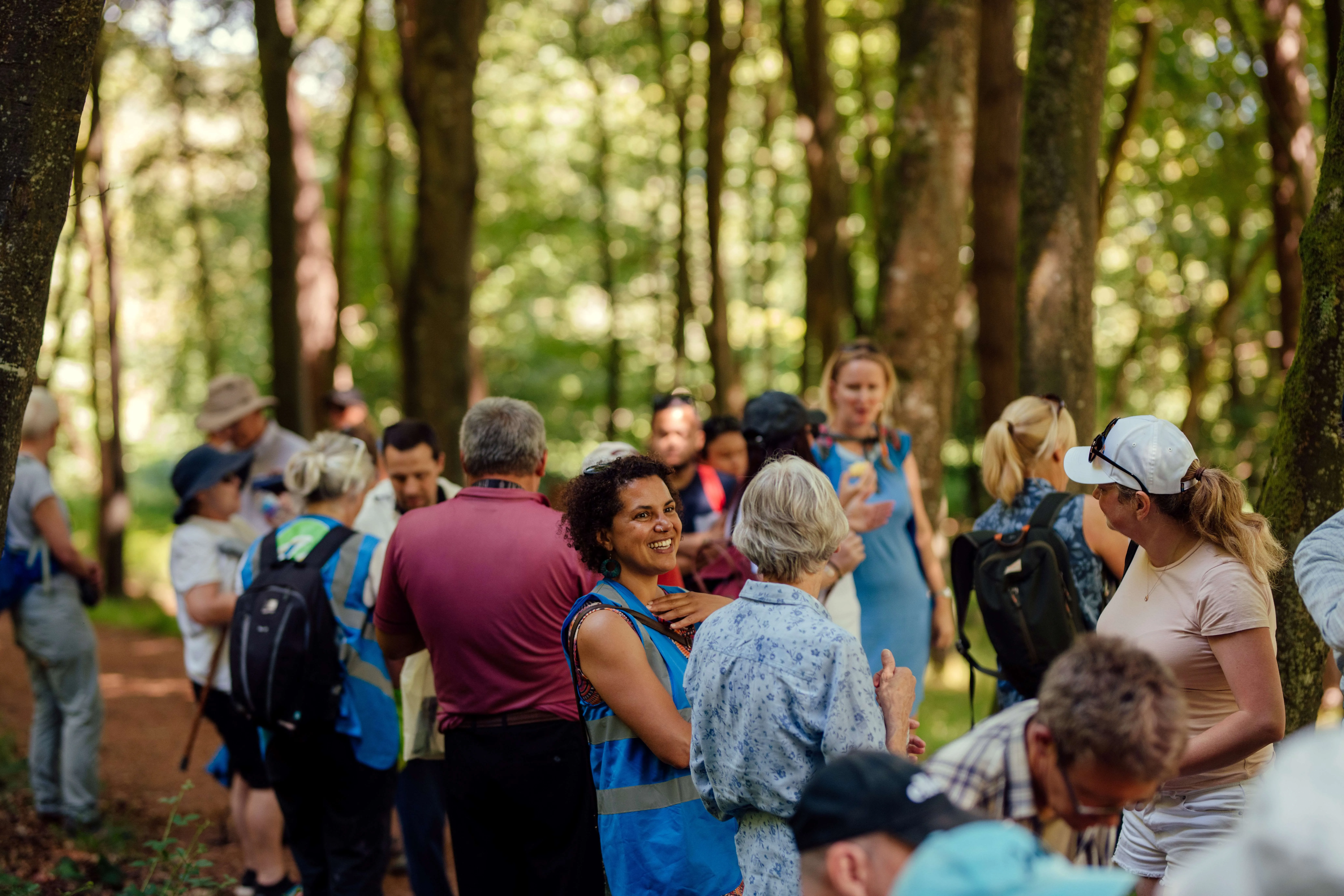
National Trails were established to enable people to make journeys through some of England’s most special landscapes. Originally designed for people travelling on foot or horseback, the network has steadily evolved to welcome a much wider range of visitors.
Today, National Trails across England are working to make routes more accessible for people using mobility aids, those wheeling or pushing, people with different sensory needs, people living with dementia and many others. Improving access is now a central part of how National Trails are planned, maintained, and experienced.
In 2025, that work received a major boost. For the first time, National Trails in England received dedicated Government funding for accessibility improvements through the Access for All programme. Previously, this funding had only been available to National Parks and Landscapes.
This was a significant milestone. Over half of the 5,500 mile National Trails network lies outside National Parks and Landscapes, meaning many sections previously had no access to this type of funding. Securing dedicated investment for the Trails represents a major step forward, and was a direct result of the advocacy of the National Trails team.
In total, £3.6 million was distributed to National Trail partnerships to deliver accessibility improvements during the 2025/2026 financial year. The funding supported capital projects, that could be delivered within the financial year in line with Government spending rules.
Across the country, Trail teams used this opportunity to deliver practical improvements – from resurfaced paths and accessible rest points to innovative digital tools that help people plan visits with confidence.
Here are just a few examples showing how this investment is already making a difference, enabling more people to enjoy our National Trails.
Somerset: Helping visitors plan with confidence
For many people, one of the biggest barriers to visiting a trail is simply not knowing what to expect. This can be particularly challenging for people using mobility aids or trampers, who often need detailed information about terrain and potential obstacles before deciding whether a route is suitable.
Somerset’s National Trail Partnership focused on improving this pre-visit information. Using Access for All funding, the team captured sections of the King Charles III England Coast Path in Somerset using Google Street View. They also developed a stand-alone version of the Street View materials that can be overlaid with information designed to support a wide range of visitors to the trail.
This tool allows users to move along the Trail digitally while accessing additional information through maps, menus and location ‘hotspots’. Visitors can see key features such as: the location of parking and public toilets, areas where there are steps, narrow gateways, and sections where access may be limited by non-accessible gates or other barriers.
Five sections of the Trail were prioritised, aligned with locations where the team has already developed circular walks and story walks.
North Downs Way: Tackling long-standing access challenges
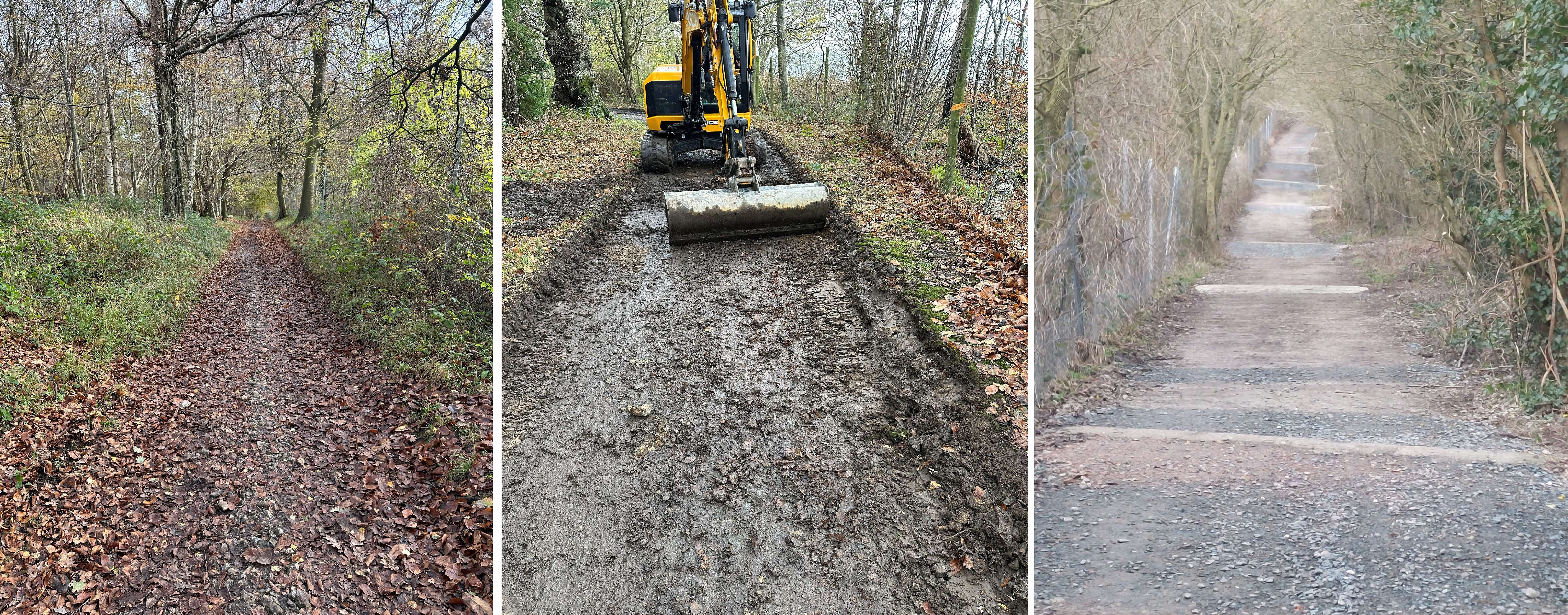
The North Downs Way team used Access for All funding to deliver eight accessibility schemes along the North Downs National Trail, addressing both infrastructure challenges and improvements to visitor experience.
Projects included :
- Upgrading a long, pitted section of National Trail at Betchworth that had been in the ‘too hard’ pile due to the investment needed.
- A full access and signage audit along the entire 50-mile Surrey section of the North Downs Way, carried out with Disabled Ramblers and Trail volunteers.
- Improvements to rest stops to better support visitors with physical access needs.
The funding also helped unlock additional investment. By coordinating works with the Kent Downs National Landscapes and Surrey Hills National Landscapes, the team was able to maximise the impact of the funding and deliver improvements that otherwise wouldn’t have been possible.
Building on this work, the North Downs Way team is now developing and field testing an Accessibility Toolkit. Drawing on lessons learned from Partners, Ambassadors and contractors, the toolkit will help share practical accessibility guidance across the National Trails and Protected Landscapes networks.
Peddar’s Way and Norfolk Coast Path: Solving complex challenges
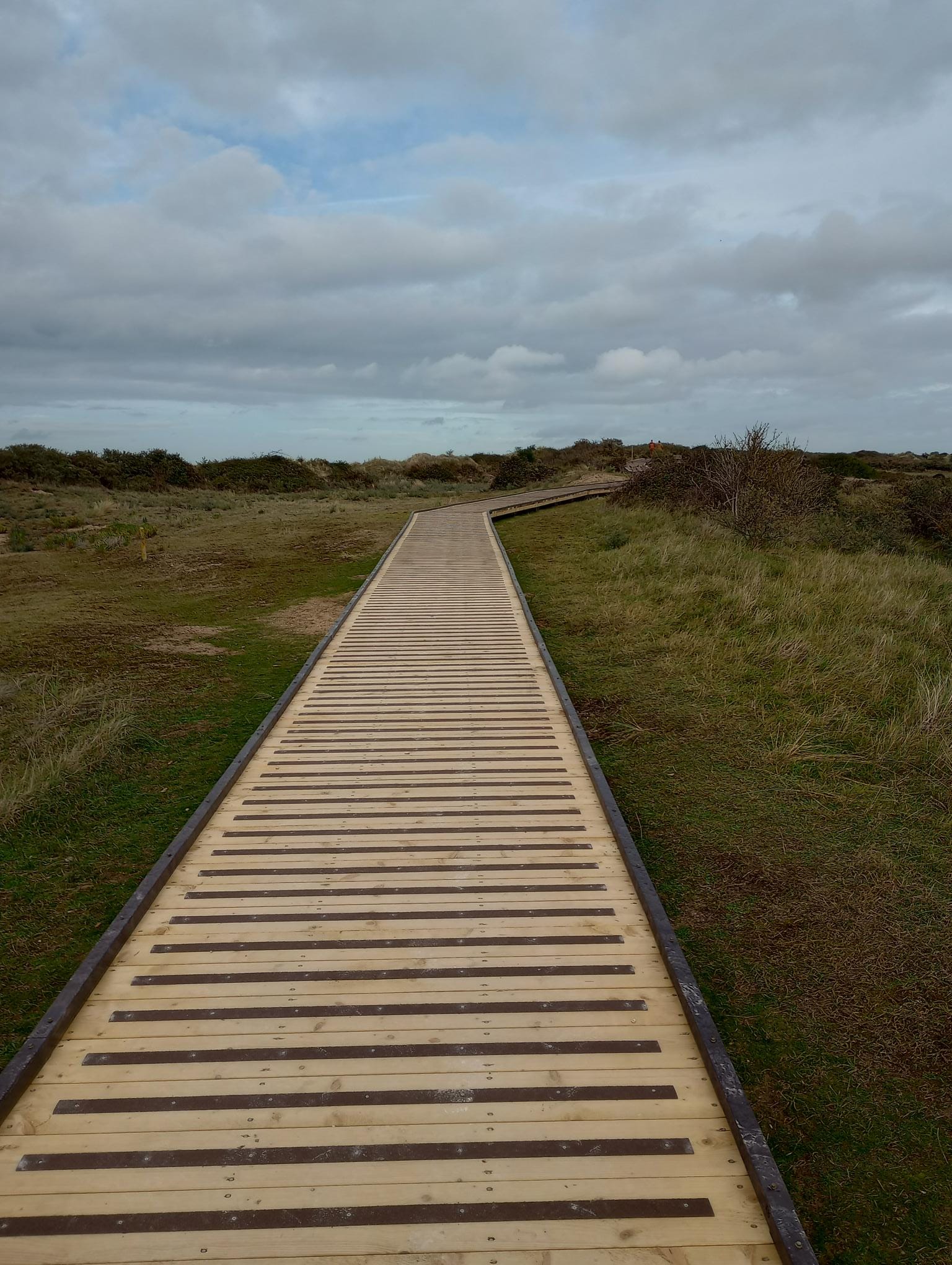
Four projects were delivered by the team in Norfolk, three focusing on the design and planning work, and a fourth delivering boardwalk replacement.
Thanks to the National Trails community created by NTUK, the Norfolk team were able to get vital advice and contractor contacts for two of the projects, Beeston Bump and Skelding Hill. These are Norfolk’s ‘mountains’, where steep slopes and site constraints have made it difficult to make them accessible. After consulting with other Coast Path Forum members at NTUK’s field trip in 2025, which focused on paths on slopes, funding from the Access for All programme means that these places will now be accessible.
One of the most technically complex projects was the boardwalk replacement at Holme Dunes National Nature Reserve.
Here, the Norfolk Coast Path National Trail passes through sensitive habitat that supports the protected natterjack toad. The team worked closely with Natural England and ecologists to design a replacement boardwalk that improved accessibility, while protecting the fragile environment and the wildlife that calls it home. The result? A safer home for the toads, and a more accessible boardwalk for people.
Thames Path National Trail: Restoring a well-loved route
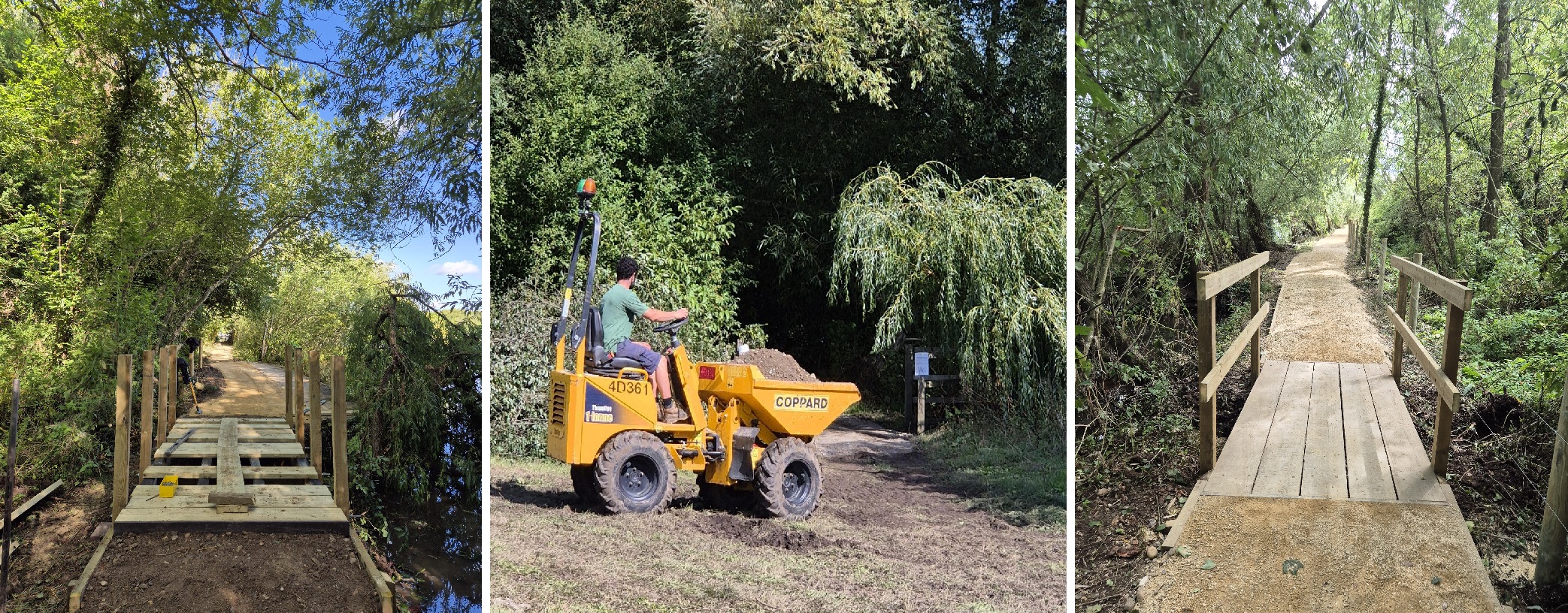
A very popular section of the Thames Path at Moulsford in South Oxfordshire has been resurfaced using Access for All funding.
Repeated winter flooding had eroded the riverbank, exposing tree roots, narrowing the path and creating very muddy conditions. With no feasible diversion available, contractors worked carefully to complete the resurfacing, while allowing walkers to continue along the path.
Local walking groups have already praised the improvements, noting how the works have significantly enhanced enjoyment of this well used and well connected section of the National Trail.
So what’s next?
Improving access is not achieved through a single project or funding round. Meaningful progress requires sustained investment in both infrastructure and people.
This includes funding for repairs, maintenance, and upgrades to the Trail, alongside investment in the people who build trusted relationships with communities and bring vital expertise and lived experience to inform the wider work of the National Trail partnership.
The inclusion of National Trails in the Access for All programme marked an important shift in Government recognition of the role Trails play in delivering access for people.
As these case studies show, the National Trails network is ready to deliver impactful accessibility improvements when the right funding is in place.
National Trails UK will continue to work with Government to secure the long term investment needed to ensure more people can enjoy these special landscapes and places.
More posts

VACANCY - Communications Officer (Coastal Wildbelt)
.jpg)
NTUK Summit 2026 - Innovation on the National Trails
_Abbie%20Merritt_lpr.jpg)
NTUK Procurement - Paths to Inclusion Evaluation Consultant
Signup to our newsletter