Across the UK, our National Trails trace more than routes through landscapes. They carry centuries of movement, memory and meaning. From ancient ridgeways to coastal paths shaped by trade, migration and imagination, these routes are living threads that connect people to place, past to present, and story to experience.
In this guest blog, Anooshka Rawden, Cultural Heritage Lead at the South Downs National Park Authority, invites us to look beyond the physical act of moving along a trail.
Drawing on personal heritage, storytelling and the enduring relationship between movement and meaning, she reflects on how walking shapes the way we think, create and belong. In doing so, she challenges us to reimagine National Trails not only as spaces for recreation and wellbeing, but as story-rich corridors, pathways that carry identity, memory and imagination across generations.
As National Trails continue to open up access to nature and support healthier lives, this piece offers a timely reminder: every path we follow is also a narrative we step into, and one we have the power to shape for the future.
Language, movement and the human journey

As Robert Macfarlane writes: ‘A walk is only a step away from a story, and every path tells’. It’s an idea that lingers because language is fascinating. We don’t take enough time to stop and really think about the visual image, the mental associations, the assumptions that sit behind words. When asked to write about our National Trails, my mind wandered… and that was the starting point.
We use analogies of movement as technical descriptors, allegorical phrases and idioms to explain and define the human experience, such as ‘neural pathways’, ‘the journey of life’, ‘hitting our stride’, ‘walking the talk’, ‘following in footsteps’, ‘fork in the road’, ‘well-trodden path’. The analogy of moving along routes – whether new paths or old – reflects something deeper within ourselves. Life as a journey is intrinsic to our understanding of the human condition.
As a species, the ability to move has been a vital ingredient in our survival and adaptation. It has also been a key component in human creativity – a landmark study by Stanford University in 2014 found that creative output increases by an average of 60% when walking . If this is true now, it will have been so for those who walked the landscape thousands of years before us.
Why movement fuels creativity and connection
%20resized.JPG)
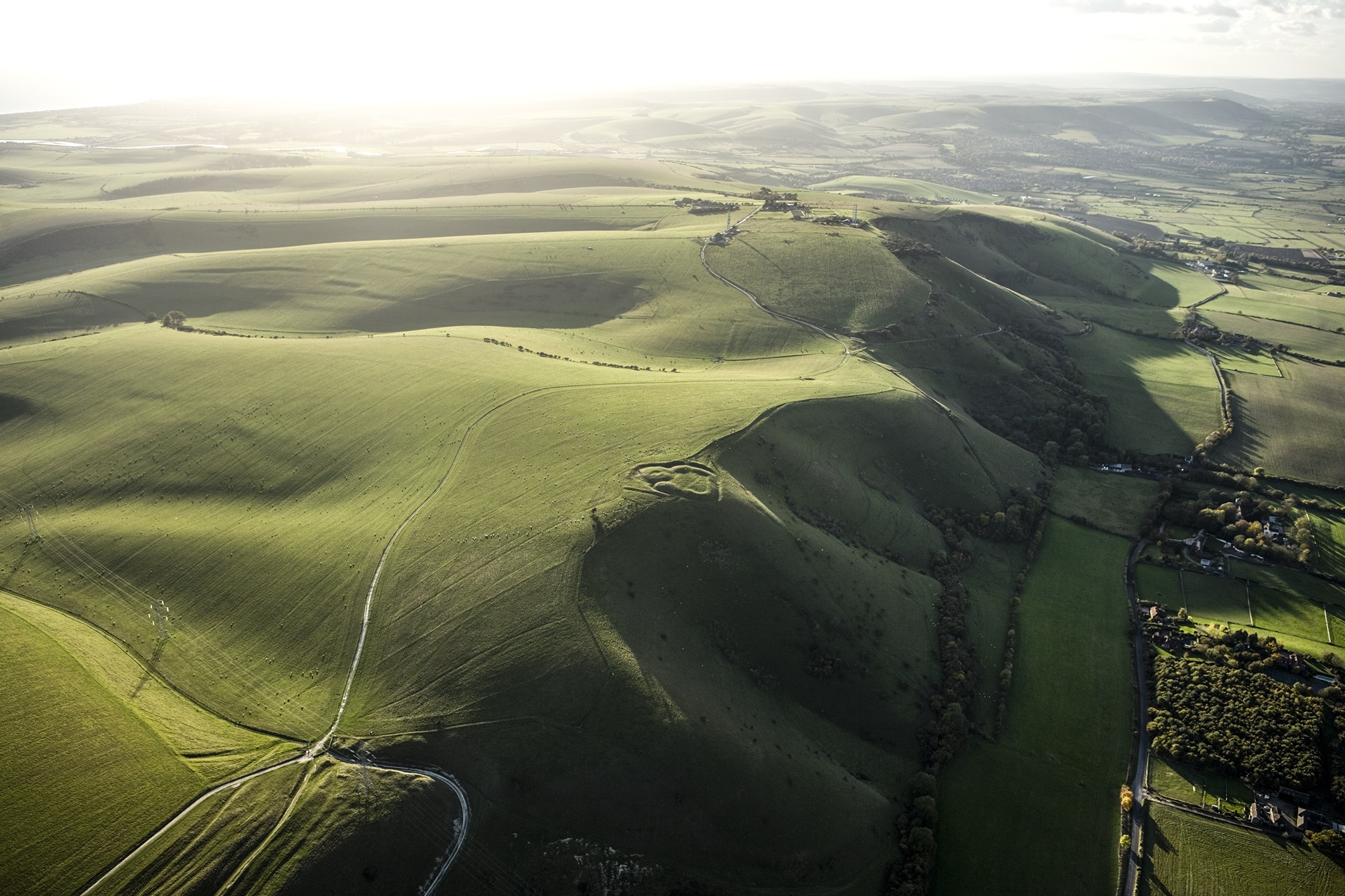
We forget that some paths that we walk today trace lines in the land that were walked before. Superhighways from the Prehistoric, such as the South Downs Way and The Ridgeway, are routes connecting symbols of belief and social structure that we see today as heritage – whether hillforts, stone circles, chalk figures, castles or burial mounds.
Creative and cultural statements visible from high ridges, routes along which we expanded perception and experience, and in doing so, let in new ideas and exhaled innovation…
National Trails as cultural heritage landscapes
We need to think about how we conceptualise these routes today. Their visual marketing is linked to exercise, recreation, fitness, holidays, all of which are wonderful things.
But are we missing their potential as pathways to stories, and links between past and future? The stories we tell about these trails, provide relevance and welcome for future generations.
I grew up in a culturally mixed household. My English family were from Devon, Cornwall and Lincolnshire, so I visited Dartmoor and the Tamar Valley in childhood, which felt like a blank canvas on which the imagination would write its stories (often, I was a pirate).
On the other side, I am ethnically Armenian, but our family have been in Sirak in the Taqanak District of Bakhtiari province in Iran for centuries. Armenians have a strong emotional connection to a mountain (Ararat, Մասիս, Kūh-e Nūḥ or Ağrı Dağı), which is considered sacred. In Iran, my family settled in sight of the Zagros Mountains. It always struck me that despite a move, those who carried the same name Karakhanyan (sometimes spelled Garakhanian) looked for a pattern in the landscape that felt like home.
Eventually our family name was Siraki, named after a place, Sirak. Both mountains are also linked to a story – the story of an ancient great flood. Just imagine that - a geological legacy and a myth combined to make ‘home’, the same story read in different landscapes. The familiarity of a feeling, if not the actuality of place.
Creativity, storytelling and experiencing place
And this is where creativity comes in. Artists are the consummate storytellers, speaking to the heart and not just the head. It’s this storytelling that taps into an ancient way of communicating and experiencing place. When we combine walking and creativity, we can inspire and connect not just to the past but to the future. We already see powerful examples of this in action:
- Nature Calling a series of projects by the National Landscapes Association, that connected communities through walking and collective creative experiences in landscapes
- Coat of Hopes by Barbara Keal walking the UK in response to the climate and biodiversity emergencies
- We Hear You Now by Alinah Azadeh, who used walking and writing to explore under-told histories of the Downland to connect audiences through new perspectives
- Black Men Walking, in which three men walk the Peak District and meet 2,000 years of Black history in the landscape
- Walk the Chalk, bringing the community together along the King Charles III English Coast Path in celebration of the landscape and our National Trails, through art, heritage storytelling and live performances
The past is the place in which we find stories anew – ones told, under-told or untold. Imagine if we revived stories from the past for future audiences, and used them to inspire exploration, understanding and connection?
This is more than just about connecting to nature and landscape, its building pride in place and our connections to each other through shared cultural experiences. And our trails are the pathways to those stories; the thread of connection across time and space.
Reframing National Trails: Beyond recreation
So where is all this going? Creativity and imagination remain key ingredients that connect our trails and landscapes, and which make tangible our experience of place, our feeling of ‘home’, powerfully, emotionally and joyfully articulated through storytelling.
If we use heritage as the muse and inspiration – assets that provide a sense of permanency, stability and familiarity through challenging times - and wrap in the creative spark that comes with moving through a landscape, something magic can happen.
By challenging the dominant, modern framing of a ‘trail’ as a mere recreational asset, and instead viewing them as a legacy of our cognitive and cultural understanding as a species, they become routes that carry memory, story and identity across time. More than lines on a map, they are story-rich cultural corridors, the arteries than connect people and place.
Unlocking the cultural value of National Trails
So how do we turn an emotional exploration of cultural heritage and National Trails into practical proposals? If we recognise Trails as cultural assets linking heritage, placemaking and identity, we could frame four clear asks:
1. Increase recognition of National Trails as Cultural Heritage Capital (CHC).
Champion Trails as mixed assets that deliver natural capital and cultural heritage benefit flows. A CHC lens also strengthens the case for storytelling and interpretation as potential tools to shape visitor behaviour and understanding.
2. Fund creative and heritage engagement alongside function and fabric.
Support National Trails to go beyond infrastructure maintenance by providing core investment in heritage research, community-led arts and dynamic interpretation, knitting archaeology and creativity into visitor experiences and building pride in place. Clear recognition of National Trails as cultural as well as recreational access assets (across Defra and DCMS) could unlock new partnerships and funding routes.
3. Use National Trails to sustain traditional skills and open pathways for young people.
Using National Trails as the lens can open up the countryside to young people, increasing awareness of access and building confidence and familiarity with National Trails, while growing conservation skills vital to managing these routes.
Through partnerships with colleges, heritage organisations and local craftspeople, National Trails could become a significant national partner in support training in traditional skills for the future (i.e. hedge-laying, coppicing, carpentry, traditional masonry, dry-stone walling, hurdle making etc.).
Framed as cultural heritage crafts - not just ‘maintenance’ - these skills can connect people to place, strengthen circular approaches to materials/local supply chains, and broaden routes into countryside careers. Not all young people can access apprenticeships, so targeted training programmes, tasters, and bolt on training for young people could make the difference and diversify countryside careers.
4. Tell the stories told, under-told and untold.
Hunting out those stories of place that are invisible or not well known can enrich our ability to create meaningful connection today. The breadth and depth of connection to place is enriched through cultural and social diversity.
We need more of the work pioneered by groups such as Dadima’s Walking Group in the Chilterns National Landscape, where cultural knowledge exchange, storytelling and time in nature has created a community championing our natural landscapes and trails.
Likewise, Generation Green connected young people from areas facing higher socio-economic disadvantage to countryside planting seeds that have the potential to grow into a future generation who will speak for nature, because they have valued its impact on their lives. Future custodianship is reliant on all facets of contemporary society seeing the value and relevance of nature to their everyday lives.
More posts
_Abbie%20Merritt_lpr.jpg)
NTUK Procurement - Paths to Inclusion Evaluation Consultant
The people behind the path: How volunteers keep the Cotswold Way National Trail thriving
How National Trails helped me understand my AuDHD
Signup to our newsletter