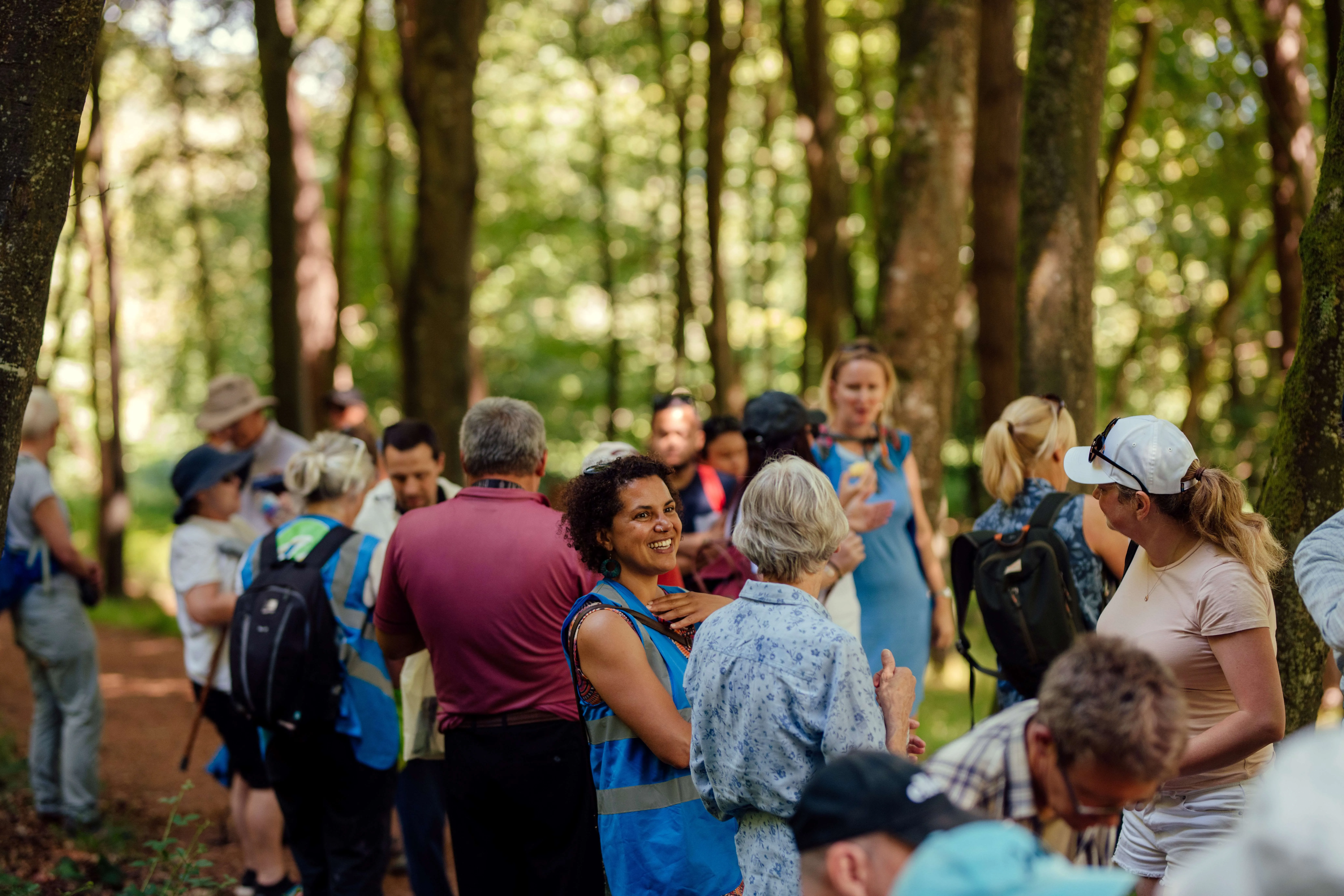
The UK’s National Trails are often seen as places for seasoned walkers and long-distance challenges. But they can also be spaces of unexpected discovery, belonging and change.
For photographer and filmmaker Roxanna Barry, their relationship with these trails began long before they realised it, and has since evolved into something far deeper. Through their work exploring identity, access and community in outdoor spaces, Roxanna documents the people reshaping who these landscapes are for.
Here, they reflect on their journey from reluctant walker to finding connection, creativity and community along the National Trails.
From avoiding nature to discovering National Trails
_Roxanna%20Barry-7.jpg)
When I was a teenager, the outdoors was my nemesis.
I managed to get stung by anything with a stinger: nettles, hornets, bees. Spiders always seemed to find their way into my room only to disappear into my wardrobe, never to be seen again (but to be thought of daily). Wasps buzzed around my face, my food - hey those are my strawberries! I had no interest in hiking, and was begrudgingly dragged on walks or bike rides by my family. I’d have much rather sat inside and built houses or made girls kiss on The Sims.
I didn’t see myself as ‘outdoorsy’. I didn’t really know what ‘nature’ was. And yet I loved the parks, the sun, the beach. I loved hopping on a bus to the Norfolk coast to sit on the beach with an ice cream with my best friend, firing 2 pence pieces into a slit, hoping to be greeted with a cascade of cash. Little did I know that I was exploring a National Trail - The Peddars Way and Norfolk Coast Path - by doing so.
Out of the house and onto the hills

Everything shifted when I went to university.
At 19, I saw a mountain for the first time. Growing up in Norfolk, I’d barely even seen a hill before. But the Mountaineering Club took me to the corners of Scotland, Wales, and the Lake District, to views I’d never imagined I’d see in person. I wasn’t a hardcore mountaineer, and I initially found these landscapes incredibly intimidating. My first self-planned excursion with a friend I’d met in the Mountaineering Club was to get a train from Glasgow to explore the start of the West Highland Way. People walked all the way to Fort William from here? I’d never even been to Fort William.
I settled into the identity of mountaineer and climber. I hiked across a glacier, climbed in the Alps, meandered up mountains in Scotland, and tried hard on sport routes. I found long distance cycle routes, and started bikepacking. Teenage me could never have imagined the freedom and joy I found on the rocks, in the hills, and on my bike. Or the connection I found to my own body through climbing, no matter it’s shape.
Finding community in the outdoors
But this journey wasn’t without its challenges.
The experience of finding these sports, outdoor spaces, and feeling my place into them was slightly shaded, as it is for many people. The countless comments, side eyes, microaggressions, and exclusions many of us have experienced. Being a woman in mountaineering, being queer, a person of colour, not skinny enough, not muscular enough.
All of these hidden rules of what’s ‘normal’ for a mountaineer in the UK, and not fitting into a single one of them, meant being constantly underestimated and my presence questioned. Whether it was a man yelling at me on my bike. Someone addressing questions to my white male climbing partner instead of me. People staring at my legs as if they’ve never seen leg hair before.
So I sought out something different.

I connected to groups working for equality for women in these sports, and embedded myself in them, to try to understand this welcoming, wholesome and healing environment, that was also somehow hostile. Working with these women, in an environment that was supportive and friendly, shifted my experience of the outdoors from macho elitism, to finding joy and friendships. I was onto something.
Creating inclusive spaces outdoors
My queer identity was always a smaller detail in my life (apart from featuring on The Sims, of course). By making space for myself in outdoor sports, I made space for this part of me to be as important as it was for me.
I began writing about women’s experiences in climbing. I wrote about queer acceptance in outdoor sports, and how to build inclusive spaces. I wrote about these things seven years ago, and they’re still, if not more important, today, with current legislation making its way into how community groups operate.
I longed for the community I had found in Women’s groups, and so a friend and I set up Queer Climbing Scotland in Glasgow. And so, I was entered into the realm of community groups up and down the country, to incredible humans doing wonderful work. I connected with Colour Up, and for the first time felt a sense of belonging in a community of people of colour, enjoying the outdoors and sports that made me feel good, surrounded by people who shared or celebrated my culture and heritage. It all hit home for me. This was what the outdoors was - community and connection.
For me, it became about people, as much as about place.
Documenting stories on the National Trails
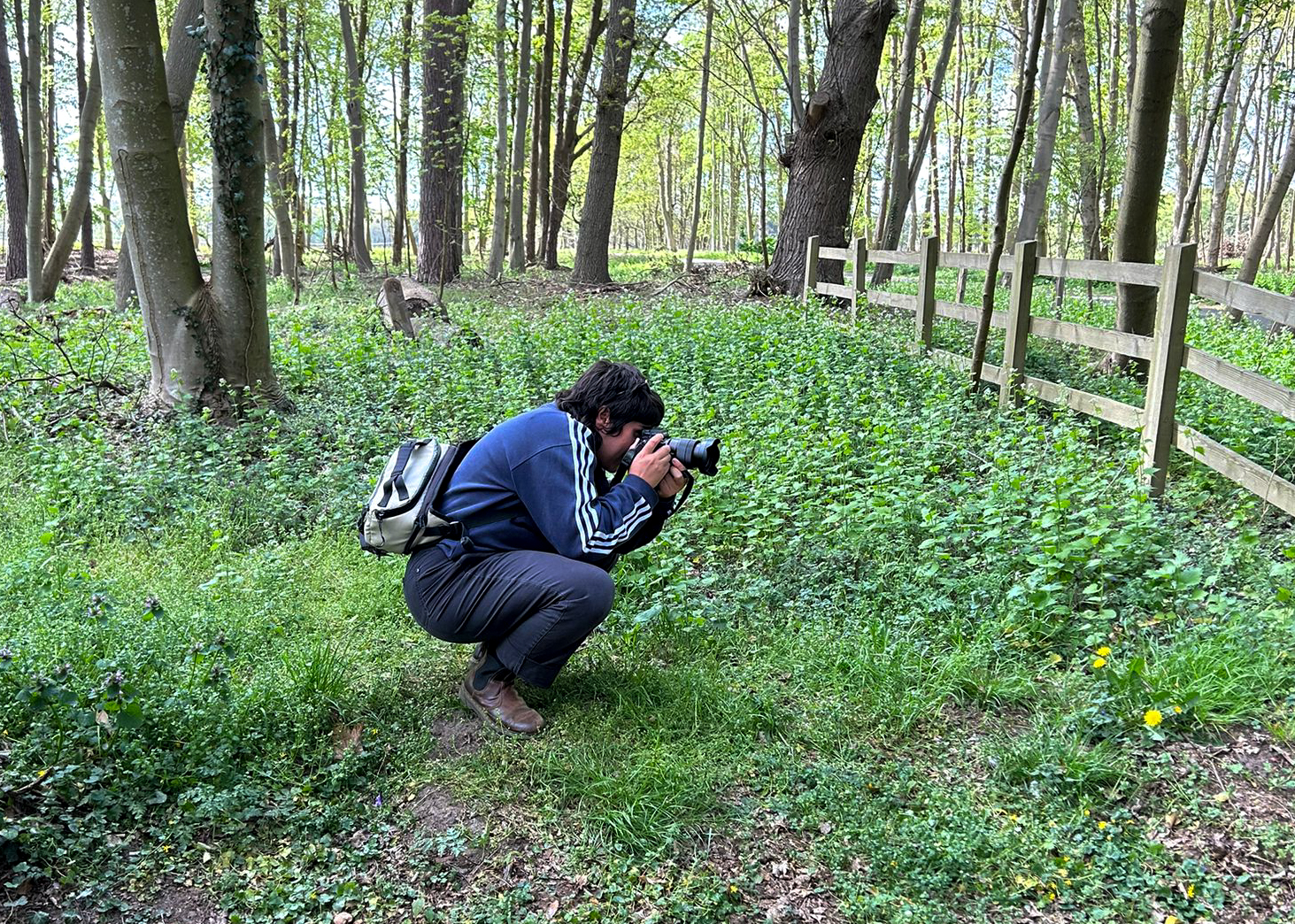
Around the same time, my career shifted from academia, to photography and filmmaking.
I spent a lot of time photographing my adventures, and this naturally led me to work with the community groups I connected with. My work embedded me further, meeting people who were providing welcoming spaces for queer folks to explore the outdoors, for marginalised racial identities to connect in a whitewashed land, and those working to improve access for all, whether through clothing or physical barriers. This was the work that was fulfilling, important, and kept me connected to the outdoors, and on multiple National Trails.
Now, I find myself photographing multiple National Trails for a variety of clients. Photographing my family along the Peddars Way and Norfolk Coast Path. Lazing with a lover on the sunny windswept cliffs at the start of the Southern Upland Way. Hiking areas of the Pennine Way and foraging for wild garlic and hawthorne with friends. The UK’s National Trails hold moments of work and play, all of which have given me incredible memories, and helped to redefine how I explore and spend time outdoors and on the trails.
Redefining my relationship to the outdoors
What I’ve learned is this: our relationship to the outdoors is ours to define.
What it can give to us, which is plentiful, but also what we can give back. How we use these spaces, and how we can take care of them. How we welcome and share them with others. Seeing how my friends forage and make tinctures and natural remedies to share with the community. Seeing their love, knowledge, and admiration of nature and plants. Being with people who haven’t had easy access to the outdoors, and sharing in their awe and joy. These are all healing experiences. For me, the outdoors is no longer centred around reaching summits or achieving elite goals. It’s about community. It’s about connection - to the land, to other people, and to myself.
Through a common interest - be it hiking, cycling, climbing - through wanting to spend time outdoors and on our National Trails, we can come together to be in community, and we can make change.
More posts

VACANCY - Communications Officer (Coastal Wildbelt)
.jpg)
NTUK Summit 2026 - Innovation on the National Trails
_Abbie%20Merritt_lpr.jpg)
NTUK Procurement - Paths to Inclusion Evaluation Consultant
Signup to our newsletter